
Propylene glycol monomethyl ether acetate, known in short as PGMEA, came out of the push for safer, more versatile solvents. Industrial needs grew in the middle of the twentieth century, with new coating technologies demanding substitutes with milder toxicity than established heavyweights like benzene or toluene. Over time, folks mixing paints and printing inks grew tired of headaches and strict regulatory hurdles brought on by old-school solvents. Researchers greeted PGMEA with relief, noting improved performance in solvent blending and fewer health alarms. Real-world adoption took off as evolving legislation forced manufacturers to swap out hazardous base chemicals with alternatives like PGMEA, a trend that only accelerated as environmental and worker safety standards toughened around the globe.
PGMEA does more than dissolve resins or aid in cleaning. Anyone familiar with electronics manufacturing will recognize its importance in photoresist stripping and wafer cleaning. Thinner and less aggressive than many high-aromatic solvents, PGMEA enables precise control in mixing and spray applications, from automotive coatings to industrial lacquers. Factories working long hours rely on PGMEA’s low odor, improving air quality and making for a safer work environment. Its flexibility answers the call for compatibility with several polymer systems, reflecting years of fine-tuning by chemists who shaped it from specialized tool to workhorse.
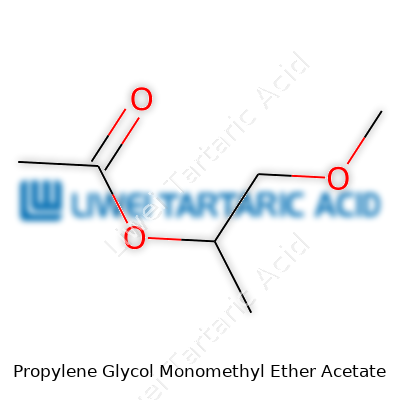
PGMEA comes as a clear, nearly colorless liquid that smells faintly sweet, a result of its ether and ester structure. Folks handling it notice its low viscosity and medium evaporation rate, a balance that gives manufacturers time to work and helps prevent issues like blushing or streaking. Its boiling point sits around 146 °C, so it stands up under moderate heat without flashing off too quickly. Dissolving power remains the key—it manages resins and dyes well, sharing traits with glycol ethers but with added finesse due to its acetate “tail.” It mixes easily with alcohols and aromatics, giving technicians room to experiment in both formula development and troubleshooting.
Every drum of PGMEA rolling into a factory comes marked with detailed information. Most suppliers stick close to purity levels above 99%. Water content, acidity, and non-volatile residue all draw tight controls, typically under 0.05% for water and only traces for acidity. You need the flash point—usually around 45 °C—front and center for safe storage and use. Shipping labels and paperwork spell out the UN number (UN 3272) and use the familiar flame mark to warn about its flammable nature. Labels also flag up safety and health hazards dictated by the Globally Harmonized System. Real-life audits and spot checks by regulators keep everyone honest, underscoring the need for complete and up-to-date paperwork.
Bright minds figured out how to make PGMEA by reacting propylene oxide with methanol to form propylene glycol monomethyl ether, a basic glycol ether. This precursor then reacts with acetic acid in an esterification process. The plant setup needs precise temperature control and smart catalyst use to push the reaction to completion while steering clear of unwanted byproducts. Years ago, batch processing ruled, but now most producers switch to continuous systems to cut waste and improve consistency. High-purity PGMEA takes extra distillation or special purification, especially for electronics-grade uses where even tiny impurities can ruin whole production runs.
PGMEA shows both stability and flexibility in chemical processing. Its structure lets it take part in further esterification or transesterification. Chemists looking to tweak volatility or polarity sometimes run modifications to fit new resin systems or to fine-tune cleaning power. The molecule resists simple oxidation but reacts under strong acidic or basic conditions, a property that lets it dissolve some tough resins while sparing others. I’ve seen more than one paint laboratory tinker with catalyst loading and reaction time, hunting for a solvent blend that hits release targets while staying within regulatory limits. People respect PGMEA for what it brings to tweaking coatings without generating too much hazardous waste.
PGMEA doesn’t hide behind just one label. Over the years, catalogs have listed it as 1-methoxy-2-propyl acetate, propylene glycol methyl ether acetate, and PMA. I’ve seen it show up as Dowanol PMA, Arcosolv PM Acetate, or under other trade names depending on the source. Anyone ordering bulk needs to double-check these names; supply chain slip-ups due to mistaken synonyms do happen and lead to production delays or quality control near-misses. These alternate names reflect the chemical’s roots in the glycol ether family, broadening its reach across industries and regions.
Safety officers know PGMEA brings fire risk. Its flash point and vapor pressure mean open flames and poor ventilation spell danger. Spill response drills always include steps to soak up spills with inert material, vent the area, and avoid direct contact since it can irritate skin and eyes. Overexposure to vapors may cause headaches or sleepiness, so plant managers run real-time vapor monitors and check exposure levels. Long sleeves, gloves, goggles, and mask use line up with OSHA and personal protective equipment protocols. Fire-fighting measures revolve around foam, dry chemical, or carbon dioxide—never plain water, which only spreads flammable liquid. Training and review keep incidents rare, but no one working with PGMEA acts casual about the risks.
PGMEA powers up as a solvent for automotive paints, factory coatings, inks, electronics, and cleaning products. In semiconductor clean rooms, it strips photoresists without damaging wafers. I’ve watched it thin tough polyurethane finishes that old solvents clouded or clumped. Printers lean on it for inkjet and screen-printing operations, using it to maintain printhead health and sharp color performance. Its moderate evaporation rate lets it smooth paint jobs on cars and trucks, giving painters a shot at glass-like finishes in climates from humid to bone-dry. PGMEA stirs up less static than some glycol ethers, a fact not lost on electronics makers fighting dust and arc risks. Surface coatings for everything from residential deck stains to high-gloss piano finishes benefit from its consistent solvency.
Scientists hack away at new ways to use and improve PGMEA, chasing both sustainability and performance. Analytical labs have tested bio-based manufacturing feedstocks to reduce fossil fuel dependency. Teams in Asia and Europe work to develop blends that cut harmful emissions, using PGMEA as a baseline for research into safer, better-performing solvents. Research meetings heat up over data from toxicity assays, process modifications, and alternative purification methods. Chemists build on PGMEA’s track record to develop new copolymers and specialty coatings for aerospace, electronic displays, or even medical devices. I have sat with R&D pros wrangling pilot-scale reactors, chasing grades of PGMEA with ever lower metal content for chip fabs demanding near-zero impurity levels.
Animal studies and health records agree that PGMEA carries less acute toxicity than many old-line solvents, but that doesn’t mean operators turn a blind eye. Exposure at high concentrations can irritate eyes, skin, or lungs, and long-term exposure raises concerns of liver and kidney impact in rodents. Most regulatory agencies have set exposure limits that keep factory floors safe, and accurate air monitoring makes those limits meaningful. Medical research continues chasing the effects of chronic, low-level exposure, particularly for sensitive groups like pregnant workers or those with pre-existing respiratory conditions. Compliance relies on ongoing training, proper engineering controls, and regular health checkups that catch problems early.
PGMEA stands at a crossroad, its continued use linked to both performance demands and tightening regulations. Pressure mounts for greener chemistries, especially from markets that reward low-VOC and bio-based ingredients. Innovation will shape whether PGMEA remains a mainstay or gives way to new blends or low-impact alternatives. Research into recycling and waste minimization could let industries hang onto PGMEA’s best traits without adding to environmental burden. Policy changes in the EU and US, barriers to hazardous air pollutants, and trends in consumer product formulation will shape demand. People building tomorrow’s electronics, paints, and inks will remember PGMEA for its role, whether as a benchmark for performance or a springboard to safer, greener options.
I remember painting my apartment for the first time, hoping for a smooth finish that didn’t make the room smell harsh for days. The can listed ingredients I couldn’t pronounce. Propylene glycol monomethyl ether acetate, or PGMEA, was among them. In the world of paints and coatings, PGMEA isn’t just filler. It goes in for a reason. It thins paint and varnishes, helping them spread out evenly across surfaces. With PGMEA, you don’t get tacky spots or dry patches as easily. People in the industry pick it because it evaporates at just the right pace. You don’t have to worry about visible streaks or rough spots. PGMEA also helps in keeping brushes and rollers from clogging up halfway through a fresh coat. Its low odor and moderate evaporation score points for both DIY painters and professionals.
You find PGMEA in the world of printers and circuit boards, too. In printing inks, PGMEA allows for vibrant color spread without warping the paper or plastic underneath. As someone who spent late nights printing posters for student events, nothing ruins the project faster than ink that smears or blots. Especially for large-scale, high-speed printing, PGMEA helps inks set properly, giving you sharp lines and reliable color.
The electronics sector relies on this solvent for photoresist materials—those special coatings that make microchips and smartphone displays function. PGMEA cleans and shapes these micro-features with precision. If a solvent cuts too harsh or too slow, those tiny circuits won’t work right. PGMEA’s balance stands out here, and research out of Japan’s electronics manufacturing confirms how critical solvent choice becomes for device yield and function.
Walk into a car factory, and PGMEA turns up in the paint shop. Car paint needs to stay glossy and flexible but also resist weather and washing. Formulators use PGMEA so the paint cures tough but not brittle. It dissolves components in the paint mixture and holds them together until sprayed onto the metal panels. You get a finish that lasts across seasons.
For industrial cleaning, PGMEA works on grease, inks, and even gummy adhesives. I once worked a summer job in a sign shop, spending hours removing old decals from storefront windows. Cleaners with PGMEA cut the gum and residue faster, saving my knuckles from endless scrubbing. You see it in specialized electronics cleaning, too, where residues have to come off without damaging fragile parts.
Even with these benefits, there’s a flip side. PGMEA calls for careful handling. Workers exposed to concentrated fumes can develop headaches or irritation, so solid ventilation and proper gloves are mandatory. Long-term, high-level exposure risks more severe health effects. Manufacturers have started taking safety upgrades more seriously, improving air systems around places where PGMEA gets used. The EPA classifies PGMEA as a volatile organic compound. In high enough concentrations, it can contribute to smog. Regulatory pressure has pushed many producers to innovate, either by limiting emissions, recycling solvents, or seeking less volatile substitutes for niche uses.
PGMEA’s utility cuts across industries—paints, electronics, automotive, printing, and cleaning. Its ability to dissolve, spread, and dry at a controllable pace keeps it popular, but growing attention to workplace safety and air quality calls for ongoing innovation. More attention to closed-loop systems and greener alternatives promises that PGMEA’s role in products we use every day will keep evolving with health and environmental standards.
Propylene Glycol Monomethyl Ether Acetate, also known as PGMEA, shows up in some places people might not expect. Factories use it for electronics manufacturing, paints, inks, and cleaning products. Many people who have worked with solvents in a shop or lab have likely caught the faint, sweet smell drifting off an open beaker of PGMEA. The compound isn't just an ingredient locked away in industrial facilities; it sometimes escapes those walls into air and water, coming into contact with people outside the shop door.
A lot of the risk comes through breathing vapors or spilling on skin. A leaky drum or careless handling splashes clear liquid on hands or sends vapor into the air. Working shifts in a tight space, painters and electronics workers end up breathing compound for hours. At home, DIY ink work or spray paints could bring PGMEA into garages and kitchens, especially if windows stay closed.
Scientists have studied PGMEA for decades. Reports from the U.S. National Institute for Occupational Safety and Health (NIOSH) and the European Chemicals Agency highlight real risks at high exposures. Short-term effects often feel mild at first: headaches, dizziness, coughing, or irritated eyes. If someone gets a big enough dose—spills on bare skin or breathes heavy fumes—a rash, nausea, or even unconsciousness can hit. Those who deal with the chemical every day sometimes notice their skin drying and cracking, especially without gloves.
Long-term exposure story feels more concerning. Animal studies link PGMEA vapor to liver and kidney trouble, and workers who've handled the chemical for years report more frequent breathing issues. Some research suggests the compound might impair reproductive health with enough exposure over time. While science hasn’t delivered a dramatic headline, it has painted a picture worth taking seriously: constant or careless exposure stacks up over years, wearing down the body little by little.
People working in manufacturing or painting face the highest levels. The danger grows in tight, poorly ventilated areas. At home, risk stays lower—but not zero—unless windows and fans pull fumes outside. Anyone who’s ever forgotten to crack a window while using industrial cleaners can remember that sharp, chemical sting in their nose.
It’s not just about big factories. Places that seem safe—garages, classrooms, print shops—accumulate vapors when people forget simple steps like opening a window or wearing gloves. Children, pregnant women, and those with asthma sometimes act as early warning systems, feeling symptoms even in less obvious situations.
Simple, consistent habits work best. Always use gloves and goggles. Use masks or respirators designed to trap chemical vapors when painting, cleaning, or working with electronics. Ventilation isn’t just a box to check—fans and windows really do make the air safer. Reading product labels closely, asking for safety data sheets at work, and pushing employers for training and protective gear can make a measurable difference. For small businesses, clear step-by-step routines matter as much as expensive equipment.
As people who work around solvents know, washing skin with soap right after a spill helps, and keeping up with regular checkups helps spot problems sooner. With these habits, the likelihood of long-term harm drops off.
The danger with PGMEA isn’t hidden, but it often gets ignored or underestimated. Stories from those who have suffered nosebleeds or breathing trouble after long days with solvents don’t fill headlines, but they matter just as much. Regulators can help by keeping exposure limits tight and updating safety guidelines. Schools and trade programs can offer simple, practical training so workers spot risks before problems start.
Propylene glycol monomethyl ether acetate, called PGMEA in the paint shop and quality lab, earns trust for its fast-drying power in coatings, inks, and cleaning fluids. But just because this chemical flows as a clear liquid and smells faintly sweet doesn’t mean we can get casual about storage or handling. Years on factory floors have shown me how missing the basics with solvents brings headaches, regulatory trouble, or worse.
PGMEA gives off vapors that catch fire easily. In my experience, fire marshals will always spot a rusty, uncapped drum or a storage area with sloppy spill cleanup. Keep this stuff away from sparks, open flames, and anything that gets hot. Mixing it with careless electrical work or even grinding tools shoots the risk up. Store containers in rooms with solid ventilation so vapors never build up to that flash point. Concrete storerooms with exhaust fans and flame-proof lights cut worries way down.
Forget about food-grade barrels or improvised plastic bins. PGMEA belongs in tightly sealed metal drums or high-density containers approved for flammable solvents. Even a small puncture or bad seal lets fumes escape faster than you think. I've watched delivery teams botch this step by stacking lightweight plastic pails in summer heat—the result is warping, leaks, and a mess nobody forgets. Metal drums with locking bungs keep things safe, even if they get roughed up during shipping or handling.
Temperature swings test storing skills. PGMEA sits happiest in cool, dry conditions—think well under 30°C, with low humidity. Stuffy storage rooms make the product degrade, and in wetter spots you’ll see rust in metal cans and sludge forming over time. I always keep my drums on pallets, above any spill trays, tucked inside a building with good airflow. Palletizing also stops metal from corroding on messy floors or reacting with concrete dust or spilled acids.
One big lesson: labels matter. Accidents happen when someone mistakes PGMEA for water or the wrong thinner. Bright hazard stickers (and clear words) reduce those slip-ups. Fence the storage area and lock cabinets after hours. Only trained staff who know the difference between solvents and regular chemicals should get keys. Audits—no matter how much they slow down a shift—help spot rule-breaks before they turn into injuries or fines.
Pouring PGMEA from 200-liter drums calls for chemical-resistant gloves, goggles, and sturdy work boots, not just because the stuff can burn or irritate skin. I've seen guys cut corners or trust old gloves—and end up with headaches or skin rashes for days. Always use drum pumps or siphons, never mouth-siphon or pour directly by hand. Clean up spills using absorbent pads made for solvents, not rags, which can turn trash bins into fire hazards.
A lot of trouble starts from treating PGMEA like water or cheap cleaner. With solvents, habits shape safety: capped drums, clean floors, routine leak checks—these little things dodge disasters. Building a culture of respect for chemical hazards on site protects people, gear, and the bottom line. Insurers and inspectors notice, too. Choose care every time; it pays off in fewer injuries, lower costs, and quieter nights.
Propylene Glycol Monomethyl Ether Acetate (PGMEA) often shows up in the conversations of chemists and manufacturers alike. If you have ever watched fresh paint dry or followed the evolution of digital printing inks, you have probably come across this colorless, almost odorless liquid many times. PGMEA already plays a significant part in products we see daily—yet most people never give it a second thought.
Big paint brands want their products to spread smoothly and stick securely to many surfaces, from metal to wood. A good solvent will let them do that without leaving streaks or clumps. PGMEA steps up to the plate with strong dissolving power. It mixes well with resins, such as nitrocellulose or acrylics, cutting through the stickiness with ease. As someone who once helped repaint steel fixtures in a busy warehouse, I know firsthand how much time you save when your solvent pulls pigment across metal surfaces without fuss. Less time rolling on each coat and more time moving on to the next job.
Inks are more than just color. Printers demand ink that dries fast but doesn’t gum up the machinery. If a solvent dries too slowly, production churns to a halt. Dry too quickly and the ink can block the jets or ruin the finish. PGMEA brings a solid middle ground by evaporating at a moderate rate. This predictable drying helps companies deliver sharp, even print runs. During a project in a packaging factory, switching to a PGMEA-based ink helped clear up blurry batch codes — the change was noticeable in wasted time and lost output, not just the quality of the labels.
No strong chemical gets a free pass on safety. PGMEA can cause headaches and irritation if not handled properly. The laboratories and factories I have walked through always made sure employees wore gloves and worked in well-ventilated spaces. Regulations from agencies like OSHA spell out the exposure levels. Staying on the safe side is not just good sense; it’s required by law. Environmental groups have also flagged VOCs, which include PGMEA, since they contribute to smog when solvents evaporate. Europe’s REACH rules and similar standards elsewhere push companies to re-examine their formula and find greener alternatives where possible.
PGMEA doesn’t solve every challenge for coatings and inks. Cost and availability sometimes put pressure on buyers, especially during raw material shortages. Sustainability goals are also nudging companies to experiment with water-based and bio-based solvents. Some of these options cut down on air pollution and toxicity but often don’t perform quite as well for certain specialty paints or high-speed printing tasks. The answer may come from blending PGMEA with other solvents to strike that tricky balance between performance and environmental impact. On the shop floor, plenty of workers would welcome safer air, but no one wants to trade off quality for greener labels. As research continues, more companies will test new mixes and hopefully find answers that fit both the bottom line and new safety standards.
Every time I’ve walked through a manufacturing site or paint-production floor, I’ve seen how important chemical integrity is to safety and to keeping things running smoothly. Propylene Glycol Monomethyl Ether Acetate (PGMEA) turns up in coatings, electronics, and sometimes even in inks. It helps dissolve tricky ingredients. It won’t get the job done if it starts to degrade or react unexpectedly on the shelf.
PGMEA has a reputation for being stable under the right conditions. I’ve talked to chemists who attest to its resistance to breaking down with basic storage practices. That doesn’t mean it lasts forever. Stored tightly sealed, away from strong sunlight and excessive heat, most manufacturers say PGMEA remains stable for nearly two years—sometimes more. Once opened, air and moisture can creep in. Quality might begin to slip if you leave it exposed or don’t close the lid tightly.
Trusting a label without considering what happens inside a real warehouse has risks. Heat, direct sunlight, and humidity chip away at a product’s shelf life. In my own experience, summer temperatures or leaky containers can cut months off the expected timeline. Chemical suppliers recommend dry areas, controlled temperatures, and containers that don’t let in air. I’ve noted how much slower degradation happens under these circumstances compared to drums forgotten in a dusty corner.
PGMEA can absorb water from the air. Its acetate group also makes it susceptible to slow reactions with acids or bases, which can creep in from poorly cleaned storage vessels. Once you have some contamination or the chemical absorbs enough moisture, you might face off-odors or a cloudier product. Both are signs the material’s performance may drop off.
No one wants to work with degraded chemicals. Using PGMEA past its ideal time frame increases the risk of inconsistent products and potential safety hazards. I’ve heard from industrial hygiene officers who emphasize the need to keep close tabs on dates, relying not just on paperwork but also spotting changes in smell, color, or clarity.
Companies with solid storage routines—labeling, regular checks, rotating stock—rarely throw away large batches. Once I saw a plant forced to dispose of an entire pallet that had sat too close to a heat exchanger. That cut into profits and caused avoidable stress. Regulatory standards usually require safety data sheets to note expiry recommendations. These guidelines are backed by physical stability tests and real-world use data.
The core answer comes down to stewardship and vigilance. PGMEA lasts longer than plenty of volatile solvents, but it pays to take shelf life seriously. Digital inventory systems, better staff training, and robust container labeling systems cut down on waste. Leading companies run periodic lab tests on stock approaching its expiry to catch subtle signs of breakdown before they show up on a customer’s production line. It’s a matter of keeping trust and ensuring safety every step of the way.

Providing high-quality chemical products and logistics solutions for global trade partners.



