
Propylene Glycol Dicaprylate didn’t pop out of nowhere. Throughout the mid-twentieth century, chemists explored esterification to tame fatty acids and alcohols for new uses. The demand for skin-friendly, stable emollients pushed laboratories to experiment with propylene glycol, known for its non-toxicity and skin compatibility. Dicaprylate esters surfaced because manufacturers needed alternatives to natural oils, something lighter and more predictable, especially as regulations tightened on certain animal- or petroleum-derived compounds. By the 1970s, propylene glycol dicaprylate was already gaining momentum in European skin-care labs, favored by cosmetic chemists looking for gentle, low-odor ingredients able to balance texture and spreadability. Each decade that followed saw technical refinements, better purification, and stricter standards, as the market for safe, renewable, and traceable cosmetic raw materials expanded. Today, documentation says more about its origin story than about breakthrough innovation, highlighting how industrial need shaped its journey.
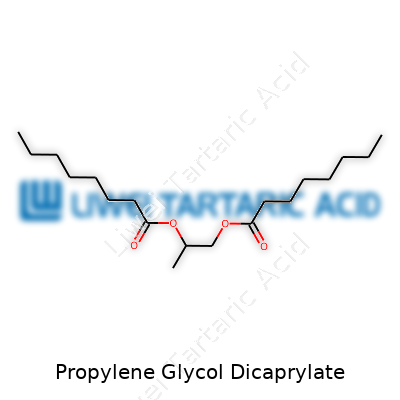
Propylene Glycol Dicaprylate belongs to the class of diesters, formed by reacting propylene glycol with caprylic acid. Marketed for its silky, non-greasy feel, it’s the unassuming backbone in countless lotions, creams, and makeup removers. Industry buyers don’t see hype or super-heroic claims; they look for reliable, reproducible softening and solvency characteristics that won’t irritate the skin or destabilize the formula. Shelf life stretches beyond two years if kept sealed and away from heat, speaking to its oxidative stability. In practical terms, its role centers around making products smoother and easier to apply, blending well with silicones, natural oils, and water-immiscible materials.
This ester slides out of its container as a clear, almost colorless liquid, sporting a faint, neutral odor. It’s got a medium viscosity, placing it somewhere between runny oils like caprylic/capric triglyceride and thicker esters. Solubility sticks to classic ester chemistry: it doesn’t mingle with water, but loves organic solvents and certain lightweight oils. Boiling point stays high, reducing volatility, which helps during manufacturing and adds safety for end users. Its refractive index lands right where formulators want—it won’t cloud up emulsions or interact badly with thickeners or surfactants. Oxidative resistance means fewer formulation headaches and longer shelf stability for finished products.
Regulatory lists treat Propylene Glycol Dicaprylate as a low-risk raw material, provided manufacturers follow food- or pharma-grade standards if the final use calls for it. Technical sheets will mention acid value (usually less than 1 mg KOH/g), saponification value (ranging from 260–295 mg KOH/g), and purity that routinely exceeds 98%. Heavy metal residues drop below accepted limits. Labeling in the European Union must cite propylene glycol dicaprylate, and in the United States, INCI labeling requirements apply, aiming for clarity and consumer transparency. Some brands add additional traceability—plant-based caprylic acid, RSPO-certified palm origins, or “clean” solvent-free processing—answering consumer interest in ingredient sourcing.
Manufacturers make propylene glycol dicaprylate by combining propylene glycol and caprylic acid in a straightforward esterification reaction. Acid catalysis is the norm, allowing for full conversion at moderate temperatures and limiting unwanted side products. Technicians strip out remaining acids and water by vacuum distillation, followed by filtration and, sometimes, bleaching or deodorizing. Those who want to tout a “green chemistry” badge will point to plant-derived caprylic acid, often isolated from coconut or palm kernel oil hydrolysis. The trend in manufacturing involves fine-tuning process conditions, minimizing energy and raw material waste, and improving yield without introducing detectable residuals or process contaminants.
At its core, Propylene Glycol Dicaprylate resists further change under standard storage and use conditions. Chemists focus on adding functional side chains or creating mixed esters—blending different fatty acids onto the propylene glycol backbone—to dial in melting points or skin-feel properties. In rare cases, it acts as an inert carrier for more reactive agents, essentially stepping aside so the real action happens elsewhere in the formula. Stability in emulsions ranks as one of its top assets: it doesn’t saponify easily and withstands typical temperature swings during production and transport.
Suppliers might sell it under “Dicaprylate PG,” “Propylene Glycol Octanoate,” or variations that reference its caprylic acid (octanoic acid) content. INCI always lists it as “Propylene Glycol Dicaprylate.” Some catalogues use product codes to distinguish purity grades, origin (whether bio-based), or particular deodorization techniques. Brands keen on green labeling sometimes mention “renewable dicaprylate ester,” but seasoned formulators care more about consistency and clear technical documentation than flashy trade names.
Safety data sheets tell a reassuring story. Classified as a low-hazard material, it triggers very little irritation on intact skin and rarely causes allergic reactions. Still, every solid production line sticks to basic personal protective equipment and clean handling procedures—splash goggles, gloves, and industrial ventilation. The European Chemicals Agency and FDA regularly review published data without adding new warnings or restrictions. Some workshops set even tighter in-house specs for heavy metals and process contaminants, reflecting the higher standards often imposed by premium-personal-care brands or pharmaceutical licensors. Downstream users, such as formulators, rarely encounter issues unless contamination occurs elsewhere in the process.
Propylene Glycol Dicaprylate shines most in cosmetics—think facial moisturizers, sunscreens, cleansing milks, and makeup removers—where it smooths skin feel and improves the glide of high-end lotions. It steps in when a product calls for something lighter than typical plant oils, avoiding shine or greasy residue. Some brands use it as a solvency booster for actives or as a co-emulsifier, especially where temperature fluctuation threatens to break an emulsion. In pharmaceuticals, its non-reactive nature fits topical applications, ointments, and dermal delivery systems. Outside the skin-care world, developers tap it for specialty lubricants, textile finishing agents, and niche anti-static coatings—anywhere softness, spread, and mildness matter.
Continuous research focuses on improving sustainability in production—better bio-based sourcing for starting materials, lower solvent use, and higher process yields. Academic groups have spent years exploring how different fatty acid combinations tweak esters’ properties for new skin-care trends or technical needs. Testing for synergy with emerging green emulsifiers or “clean beauty” actives is ongoing. Environmental assessment—the so-called cradle-to-grave analysis—remains key for forward-looking brands, especially as European and Asian markets demand more documentation of lifecycle impacts. Partnerships between suppliers and finished-good manufacturers speed up adoption of higher-purity or certified-sustainable grades, meeting both regulatory pressure and consumer demand for traceability.
Animal studies and in-vitro tests reinforce propylene glycol dicaprylate’s low acute and chronic toxicity. Oral and dermal routes show minimal absorption and rapid clearance from the body. Scientists watch for skin-sensitization potential, especially given consumer pushback against less benign esters, but results since the 1990s have shown a strong safety profile. Extended studies on cumulative exposure in cosmetic settings haven’t raised concern, and regulatory agencies continue listing it among low-risk moisturizer components. Environmental studies indicate it breaks down without leaving persistent, harmful residues, so regulatory bodies haven’t lumped it into the microplastics or persistent organic pollutant categories. Still, research continues to track minor by-products and supply-chain trace contaminants, a nod to vigilance as expectations for transparency rise.
Growth for Propylene Glycol Dicaprylate seems tied to rising demand for non-irritating cosmetics and vegan, sustainable raw materials. As more formulators ditch older petroleum-based emollients, proven diesters like this one gain favor. Developers push for even cleaner sources, integrating blockchain or AI-driven quality tracking to please regulators and consumers alike. Advances in synthetic biology could shift caprylic acid production from palm and coconut to yeast fermentation, further shrinking environmental footprints. Testing for novel combinations with plant-derived actives or upcycled by-products might broaden its use into new wellness or therapeutic markets. Keeping pace with evolving safety and sourcing standards, manufacturers who invest in transparency see the strongest future, ensuring this modest but vital ester doesn’t fall behind in a world of rising consumer scrutiny and ever-changing regulatory expectations.
Propylene glycol dicaprylate sounds like something you’d only find in a chemical plant, but it has quietly become part of many personal care routines. Flip over a moisturizer, sunscreen, or foundation, and you might notice this name tucked among the ingredients. I once bought a new “clean” sunscreen, only to discover that this very ingredient was part of the blend. So, what makes it so common in the things we already trust and use?
Skin care brands don’t just throw ingredients together because they sound complicated. Propylene glycol dicaprylate brings a few key things to the table. It's an emollient—meaning it softens and smooths the skin. Think of it as the thing that helps a cream glide nicely over your face, soaking in instead of sitting there making you shiny and sticky. Years of reading up on these ingredients taught me that consumers, myself included, tend to pick products based on texture just as much as results. Texture keeps you coming back to a certain brand or product. Brands know this. They need ingredients that deliver that “this feels good” moment, and propylene glycol dicaprylate makes that happen.
It also acts as a carrier for other beneficial ingredients. Vitamin E, nourishing oils, and antioxidants all need something to get them from the bottle into your skin. This molecule helps all of those star ingredients mix together and penetrate just the right layer. I once tried making my own lotion as an experiment, using only kitchen items, and it separated into a gooey mess. Professional products use ingredients like this one to stay stable and effective—helping them to last from the time you open the lid until the last squeeze from the tube.
Plenty of folks worry about ingredients with long chemical names. I’ve heard it in drugstore aisles and read it online—concerns about safety aren’t rare. Science does its job: dermatological studies and safety assessments by health authorities, including the Cosmetic Ingredient Review (CIR), rate propylene glycol dicaprylate as low risk. Skin irritation appears uncommon. Brands stick to concentrations that keep irritation off the table for the vast majority of users. Still, if you have very sensitive skin or are prone to allergies, it helps to test a new product before committing to daily use.
Sustainability is top of mind across the beauty world. Many shoppers prefer plant-sourced ingredients over synthetic. Propylene glycol dicaprylate often comes from both petroleum and natural fats. Companies are starting to shift their sourcing and show customers more transparency about each ingredient’s origins. As transparency becomes a selling point, it’s worth asking brands where their raw materials come from and what steps they take for environmental responsibility. The move toward greener chemistry doesn't mean tossing out every synthetic substance, but thinking about how they’re made, how they break down, and their wider environmental impact.
Anyone curious about what’s inside their bottle should look past scary-sounding names and focus on performance, safety studies, and brand values. Propylene glycol dicaprylate plays a behind-the-scenes role. It holds beauty products together, creates that silky feel, and gets key nutrients where you want them. If a product delivers visible results and safety checks out, it deserves a spot on your shelf.
People care more than ever about what touches their skin. Labels on skin care bottles read like science textbooks, and everyone wants assurance that ingredients such as Propylene Glycol Dicaprylate won’t backfire. That’s fair. I’ve spent years--sometimes with dry cheeks, sometimes with a stubborn patch of eczema--wondering if products are really safe or just safe “enough.” Propylene Glycol Dicaprylate pops up in many face creams, sunscreens, and makeup primers. It smooths things out, helps other ingredients work together, and keeps products from feeling greasy.
The truth is, ingredients don’t go into our lotions by accident. Companies turn to research, and regulators like the U.S. Food and Drug Administration or European Commission set clear limits for use. The Cosmetic Ingredient Review Expert Panel looked closely at Propylene Glycol Dicaprylate. According to published safety reports, this compound shows very low potential for skin irritation or allergic reaction when used as intended in cosmetics. Most folks put it on without issue, and that includes those with dry or sensitive skin. Even trustworthy organizations like the Environmental Working Group give it a score that signals low risk in personal care.
There’s always a skeptic—maybe the kind who breaks out with a whiff of coconuts or can’t wear perfume at all. Anyone with a known allergy to similar compounds should patch test before using a new formula with Propylene Glycol Dicaprylate. But compared to notorious troublemakers like dyes or fragrances, this ester doesn’t top the list of worries. It isn’t a penetration enhancer in the way that propylene glycol alone can be, so it’s less likely to drive other chemicals deep into living skin layers. Dermatologists who patch test ingredients don’t flag this one for special concern outside of rare cases.
Not all creams, lotions, or makeup use pure ingredients. Manufacturing shortcuts, contamination, or poor handling sometimes introduce risk, no matter how safe an ingredient looks on paper. Brands that follow Good Manufacturing Practice, source from reputable suppliers, and keep quality controls tight deliver far fewer problems. As someone who checks lot numbers on serums and pays attention to recalls, I’ve found most rashes trace back to cheap, off-label products or expired stock, not Propylene Glycol Dicaprylate itself.
If you want to avoid problems, check for certifications on cosmetics and buy from companies with a track record of transparency. Reading ingredient lists is smart, but watching your own skin’s reaction over days or weeks gives you the most honest answer. For people with medical skin conditions, run anything new past a dermatologist. Consumer education, better labeling, and open company communication can help cut the anxiety that comes from unfamiliar chemical names.
The ingredient in question shows no reason for alarm when used responsibly. Focusing on ingredient quality, monitoring your personal response, and trusting brands that provide full information adds up to safer and more enjoyable self-care routines.
Propylene glycol dicaprylate pops up on a lot of labels—creams, serums, conditioners. Before pouring anything on your skin or hair, most folks want to know where these complicated-sounding ingredients come from. Propylene glycol dicaprylate is an ester that’s made by combining propylene glycol with caprylic acid. Caprylic acid shows up in natural fats and oils, especially coconut and palm kernel oil. Propylene glycol usually comes from petrochemical processes but can be sourced from bio-based materials like corn or sugar beets using fermentation. The big question is about its path—does a cosmetic company use the nature route or stick to the easier chemical one?
People ask about natural sources because many want to reduce their exposure to petrochemicals. For years, my own skin reacted to anything too synthetic—strange rashes, stinging, and redness. Label reading became a hobby. Many share this personal motivator or choose “green beauty” for environmental reasons. Fossil fuel-based ingredients carry a larger carbon footprint and contribute to resource depletion. Nature-based options give peace of mind, but switching from petroleum isn’t always straightforward. Plant farming requires land and water; growing coconut or palm comes with habitat and labor concerns. Each approach has costs.
Many companies still rely on petroleum for propylene glycol, since it’s cheap and scalable. A minor portion, usually marked "naturally derived propylene glycol", comes from fermenting sugars. Caprylic acid often gets extracted from coconut or palm oil, though synthetic versions exist. Finished propylene glycol dicaprylate is almost always a lab creation, no matter the starting point. If every ingredient got pulled right from a tree, the cost and shelf life would surprise most shoppers. Natural doesn’t always mean better or safer, but the backstory affects trust.
More brands now highlight when propylene glycol comes from plant sugar or list “vegetable-derived” on the label. Some offer full ingredient traceability. Shoppers can look for third-party certifications (like COSMOS or Ecocert) that require bio-based sourcing. Others settle for “free from” lists or allergen testing. Pressure is growing as consumers demand supply chain honesty and lower environmental impact. The challenge: ingredient processors don’t always tell brands where they got their raw materials. You’ll spot brands that can only say “derived from natural oils and sugars when available”. That’s the market’s transparency gap.
People want safer, cleaner, low-impact formulas. The cosmetics field is searching for plant-based propylene glycol that performs at scale. That switch depends on farmland, technology, and sometimes government incentives. If a natural origin matters to you, check for “plant-derived propylene glycol dicaprylate” and certification. Ask brands for supplier details or allergen statements. Lab-made or natural, propylene glycol dicaprylate exists to smooth, soften, and help other ingredients do their job. The more transparent the ingredient’s journey, the easier it is for everyone to choose what works best for their health and values.
Anyone who’s glanced at the back of a moisturizer or shampoo bottle has likely run into a long list of chemicals. Propylene glycol dicaprylate stands among them, showing up in a range of skin creams and lotions. Companies turn to it for its light texture and smooth feeling. That’s great for spreadability, but as with every ingredient, it helps to know what we’re actually putting on our skin.
People often worry about well-known irritants like fragrances or parabens. Ingredients like propylene glycol dicaprylate rarely make headlines. Over the years, as a long-time eczema sufferer, I’ve learned to pay close attention to anything that touches my skin. Dermatologists like to remind patients that allergy doesn’t always mean “common” or “likely.” Allergies develop through personal history—what works for one person might trigger a red, itchy rash on another.
Reports in medical journals show that propylene glycol (the parent compound) can set off allergic contact dermatitis in some people. Dicaprylate, a related derivative, hasn't drawn the same level of attention in allergy clinics, but that doesn't mean it never sparks a reaction. There are real cases where people have developed itching or a burning sensation after using a skincare product containing this ingredient.
Most dermatology studies suggest propylene glycol dicaprylate doesn’t commonly cause allergies. The Cosmetic Ingredient Review Expert Panel, which reviews safety data for the US, concluded it delivers a low risk of irritation or allergy in most people. Still, that’s based on existing research—studies don’t always capture everyone’s experience. Sensitive skin types or people with damaged barriers may get more than what’s expected.
Statistics from patch testing clinics rarely list propylene glycol dicaprylate as a top allergen. Compare that with nickel or preservatives—much more likely to show up in allergy patch results. Yet there’s still a chance for reactions. A study in “Contact Dermatitis” a few years ago described isolated cases. For those with a personal or family history of skin allergies, even a minor risk deserves respect.
Anyone who’s had issues with cosmetic or skincare products should always check the full ingredient list, not just the fancy label claims. Drugstores sell fragrance-free, hypoallergenic options for a reason. A patch test—dab a bit of the product on the inner wrist or elbow before using it all over—has saved plenty of people from rashes and regrets. Physicians I’ve worked with encourage patients to bring in their own products to discuss the ingredients, especially when dealing with chronic rashes.
In my circle, more friends have started using online databases that break down product safety and highlight possible allergens. The American Contact Dermatitis Society and SkinSAFE app know their stuff. They give simple, science-based answers that everyday shoppers can actually use. Taking screenshots or notes during a visit to the dermatologist makes it easier to find safe alternatives in the future.
Cosmetic companies could invest more in easy-to-read ingredient explainer sheets. Dermatologists would see fewer frustrated patients if brands provided samples or testers, especially for new products. Being up front about even a small allergy risk helps people make choices that work with—not against—their skin health. Science points toward low risk with propylene glycol dicaprylate, but real-life sensitivity matters to the consumer standing in the drugstore aisle, reading tiny print, trying to avoid the next rash.
Propylene Glycol Dicaprylate pops up in plenty of skincare bottles—a lightweight synthetic ester with a reputation for making skin feel soft. Most folks run into it in moisturizers, sunscreens, or makeup primers. Skincare fans worry about “comedogenic” ingredients, the ones blamed for clogged pores and breakouts. Let’s get right into the heart of this concern.
Dermatology circles rate ingredients using a “comedogenic scale.” Zero means an ingredient won’t clog pores; five guarantees it will. Researchers haven’t flagged propylene glycol dicaprylate as being highly comedogenic—its cousin, caprylic/capric triglyceride, sits near the middle of the scale (usually rated 2). Propylene glycol dicaprylate is an ester, meaning it combines alcohol and fatty acids, but it has a lighter touch than coconut oil or heavy natural butters.
No ingredient suits every face, though. Anecdotally, people with stubborn acne sometimes see breakouts after any kind of fatty ester. This isn’t backed by large-scale clinical data for propylene glycol dicaprylate specifically. The Environmental Working Group lists this ingredient as low risk when it comes to acne. Cosmetic chemists confirm it’s not widely flagged in case reports of breakouts, especially compared to isopropyl myristate or lanolin.
My own experience with acne-prone skin taught me to scan ingredient lists like a hawk. Strong fragrances, thick oils, and waxes usually trigger bumps for me almost overnight. Using products with propylene glycol dicaprylate hasn’t led to visible issues. Peers in the skincare community echo this. That light, silky feel spreads easily and doesn’t leave tacky residue. It blends well with water and oil-based products, which matters for daily routines, especially in hot climates.
Online acne forums mention rare cases of irritation, but not a pattern of massive breakouts. Dermatologists steer clients toward ingredients like this when seeking something non-greasy, less likely to feel suffocating, and fast-absorbing, especially for folks managing oily patches and sensitivity at the same time.
With more teens and adults wrestling with acne each year, everyone’s looking for ingredients that won’t worsen clogged pores. The beauty industry latches onto trends, and fear of breakouts drives many switches to “non-comedogenic” labels. Being able to separate hype from fact gets crucial. Brands slap “non-comedogenic” on products even if there’s little or no research. Independent sources like peer-reviewed journals or databases created by groups like the EWG become vital.
Data from real people matters. The American Academy of Dermatology stresses patch testing anything new—especially for those with sensitive skin or histories of allergic reactions. Companies don’t test every possible ingredient blend on every skin type. Your body’s unique biology always plays a role, which means observation still beats dogma.
If breakouts cause concern, sample new skincare on a small part of the face or neck first. Look out for bumps over a week. Watch for hints of irritation, like redness or itching. Keep a simple routine—swap one new product at a time. If breakouts continue, check ingredient lists for patterns, and consult a board-certified dermatologist before switching everything at once.
Skin responds best to patience and evidence. Science points to propylene glycol dicaprylate as generally low-risk in the comedogenic department. Still, there’s wisdom in trusting both your research and your own skin’s story.

Providing high-quality chemical products and logistics solutions for global trade partners.



