
Magnesium salts have carried a long tradition in both medicine and manufacturing, but magnesium gluconate dihydrate came into its own as scientific understanding of micronutrients grew during the 20th century. Researchers realized that not every magnesium supplement worked the same way inside the body. Some salts absorbed better than others. Magnesium gluconate emerged during this shift, appreciated for its high bioavailability and relatively mild flavor. Health products and pharmacological blends adopted it, often in response to magnesium deficiency studies in the 1960s and 1970s. Since then, magnesium gluconate dihydrate found its place on pharmacy shelves, feeding the growing interest in trace minerals for personal and public health. As health science matured, the focus moved toward not just meeting but optimizing magnesium intake for daily wellness and metabolic support.
Magnesium gluconate dihydrate stands as a white to off-white powder or granular substance. You won’t notice much taste or odor; it blends easily in water, making it a strong candidate for pill, tablet, and liquid formulations. Many brands offer it as an active ingredient in nutritional supplements, renal care formulas, and electrolyte blends. You can also see it in fortified foods or even animal nutrition, always leaning on its reliable absorption profile. This dihydrate version trades on stability and measured release, reducing the risk of digestive upset compared to simple magnesium salts.
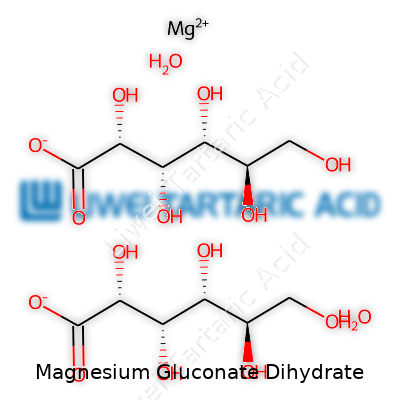
Chemically, magnesium gluconate dihydrate holds the formula C12H22MgO14·2H2O. Its molecular weight lands near 450.63 g/mol. Water solubility runs around 50–100 mg/mL—better than most other common magnesium compounds. The substance is crystalline by nature. It won’t give off any strong aroma and usually stays stable at room temperature, if you shield it from moisture and direct sunlight. It doesn’t break down quickly, keeping its potency on the shelf for several years. If you look closely at the material under the microscope, the crystallinity stays quite dense and compact, hinting at its ability to withstand rough handling in formulation lines.
A reputable sample of magnesium gluconate dihydrate will show a minimum of 5.8–6.3% elemental magnesium, measured by atomic absorption or ICP techniques. Pharmaceutical and food-grade samples hit stringent purity standards: low heavy metals (<10 ppm for lead), arsenic (usually <1 ppm), and a controlled moisture content, usually max of 12.5%. Labels must state magnesium content, batch, country of origin, and any excipients. Professional quality control teams run tests on microbial load, heavy metals, and dissolution rates. If the material goes into supplements or food products, global regulations demand conformity with CODEX and local pharmacopeias, often the USP or EP guidelines.
Manufacturers start with gluconic acid, which usually comes from fermentation of glucose using Gluconobacter or similar microbial strains. Magnesium carbonate or oxide then reacts with gluconic acid under controlled pH and temperature, producing magnesium gluconate. They filter, purify, and concentrate the solution before crystallizing the dihydrate form by slowly cooling or evaporating. Additional purification steps get rid of excess reactants and unrelated ions. The wet cake gets dried under gentle conditions to retain two water molecules, key for formulation consistency and shelf stability.
Magnesium gluconate's carboxylic groups make it mildly reactive in strong acids, resulting in the possible formation of gluconic acid and magnesium salts. The salt also forms stable complexes with other nutrients—one reason why it’s often used in multi-mineral tablets. There’s engineering interest in coating this molecule with thin lipid films, aiming to adjust its dissolution profile and make slow-release tablets. Some research teams explore esterification techniques to tweak its solubility or target delivery to specific organs, though these ideas haven’t broken into mainstream production yet.
This compound goes by many handles in commerce and science. Magnesium gluconate dihydrate sits alongside other names such as D-gluconic acid magnesium salt, E578 (as a food additive), and just "magnesium gluconate" in supplement facts panels. International suppliers sometimes use "Magnesium(II) gluconate dihydrate" in certificates of analysis, but consumers will see simple versions plastered on bottles and ingredient lists. A few companies give proprietary names depending on marketing or intended use, but the underlying molecule stays the same.
Handling magnesium gluconate dihydrate rarely brings major safety risk, although industrial hygiene suggests gloves and masks for workers dealing with bulk powders. Inhalation or contact can irritate eyes or passages, so local exhaust ventilation helps. Regulatory agencies worldwide place magnesium gluconate in the GRAS (Generally Recognized As Safe) category for food, and all evidence points to good tolerance. Facilities follow GMP (Good Manufacturing Practice) standards, maintaining traceability, documentation, and routine equipment cleaning. Spillage cleanup just means sweeping and washing down. Storage works best in closed drums, cool and dry, well-ventilated spaces, away from acids and drastic humidity swings.
Oral magnesium supplements cover the main application, driven by the unmet need for better magnesium sources in the modern diet. Hospitals rely on it for parenteral nutrition or treating severe deficiency, especially among cardiac patients or those with gastrointestinal disorders. Beverage and dairy producers also use this salt for functional food fortification—orange juice, sports drinks, and yogurts tout its health benefits. Animal feed manufacturers feed global livestock with it to maintain herd productivity and prevent chronic deficiency. There’s even interest in dermatology and wound healing, with topical gels and sprays drawing from its mildness and biocompatibility.
Academic and clinical teams dig into magnesium gluconate’s distinct absorption pattern, comparing it side by side to citrate, oxide, and sulfate forms. Data keeps showing better bioavailability than magnesium oxide, which translates to more reliable effects at lower doses. Pharmacokinetics research measures how quickly humans take in and clear magnesium from this form, often pointing to safer, steadier plasma levels. In recent years, scientists have probed its role in mitigating cardiovascular risk and controlling blood glucose. A handful of studies look at stress, anxiety, sleep, and even premenstrual syndrome, as magnesium moves into the spotlight for neuropsychiatric wellness. Multicenter trials use it in combination therapy for heart failure and arrhythmia, trying to find an edge over existing regimens.
Magnesium gluconate’s gentle profile means risk of overdose stays quite low when people follow dosing guidelines. Acute toxicity appears only at massive doses, with diarrhea or mild gastrointestinal discomfort marking the earliest symptoms. Fatal toxicity in humans seems almost unheard of except in kidney failure, where the body can't clear the mineral efficiently. Animal toxicology studies report high LD50 values, echoing its status as a safe supplement. Long-term surveillance in humans shows few adverse events. Regulatory authorities do recommend monitoring people with renal impairment, but for healthy adults and children, side effects remain rare.
Driving interest in magnesium gluconate dihydrate looks set to stay strong as metabolic disease, stress, and lifestyle disorders keep rising worldwide. Nutritionists and healthcare teams push for more precise micronutrient management, so supplement makers keep refining dose, delivery, and combination formulas. Research groups work on encapsulation and nano-formulation approaches to enhance absorption or make use of synergistic blends. With more people tracking their wellness through wearables and home kits, personalizing magnesium intake could be just around the corner. Regulatory clarity and cross-border supply agreements should help encourage safe, consistent quality, while next-generation manufacturing focuses on greener production and resource efficiency.
Magnesium gluconate dihydrate comes up often in the world of nutrition because magnesium helps everything from energy production to muscle function. Many people live with low magnesium levels and barely notice before small problems stack up—muscle cramps, fatigue, even mood swings. I remember switching to a magnesium-rich supplement during a training cycle and seeing my sleep quality improve without extra effort. Magnesium gluconate stands out among supplements for one reason: the body absorbs it well. This means more of what you pay for gets into your system, not washed away unused. Each tablet or powder blend gives not just magnesium, but a form the body recognizes and puts to work where it’s needed most.
Doctors and researchers spend serious time looking at heart health, tracing lines between nutrient levels and outcomes. Magnesium holds a starring role in regulating blood pressure and keeping heart rhythms steady. There’s strong science behind this, with a report in the American Journal of Clinical Nutrition showing lower magnesium intake links with a greater risk of heart disease. Adding magnesium gluconate to daily routines isn’t about chasing fads—it's about filling gaps that come from everyday diets. People who eat lots of processed foods or skip greens and nuts end up short. Over time, this puts extra stress on the heart. Instead of scrambling when problems show up, steady supplementation brings peace of mind and supports lifelong health.
Walking down the supplement aisle, the number of magnesium types can overwhelm even savvy shoppers. Digging into ingredient labels reveals choices: oxide, citrate, gluconate, and more. I’ve run into headaches with magnesium oxide due to its low absorption rate. Gluconate’s solubility means less stomach upset and fewer trips to the bathroom. That’s the real-world difference—the body handles it better, giving more energy without the digestive trouble. For people managing sensitive stomachs or young athletes growing fast, this form makes life easier.
Most people talk about calcium for bones but skip magnesium. Bones need both, like a house needs foundation and bricks. Magnesium gluconate not only delivers its own benefits but helps calcium get into the bones where it builds density. Studies from NIH research labs support this; they show that low magnesium softens bones and raises fracture risk. Teachers and parents often look for ways to help teenagers get enough calcium—slipping magnesium into their diets brings a two-for-one benefit. This approach keeps fractures away and supports kids through major growth spurts.
For people with chronic illnesses, older adults, or those on certain medications, magnesium levels drop and stay low. Doctors suggest magnesium gluconate because it provides relief without major side effects. Small doses over time create steadier results than random bursts from fortified foods. Eating spinach and nuts brings in some magnesium, but real life gets in the way—picky eaters, allergies, or tight budgets. Supplements bridge the gap and turn small changes into big results. Checking in with a doctor or registered dietitian ensures safe use and catches any risks with other medications. Addressing low magnesium today helps prevent bigger health struggles tomorrow.
Many folks overlook the role magnesium plays in daily life. This mineral quietly shapes how our muscles work, how nerves fire messages, and how the heart keeps its steady rhythm. Sometimes, low magnesium doesn’t scream out loud, but it can stir up muscle cramps, fatigue, and even mess with mood. Getting it right, especially from something like magnesium gluconate dihydrate, keeps these troubles at bay.
Pill bottles and supplement shelves rarely provide the same answer. Some say 500mg per dose is fine, others cut much lower. Here’s the deal: the number stamped on a label usually points to the total compound, not the actual magnesium your body uses. Magnesium gluconate dihydrate contains only a fraction of elemental magnesium. Out of a 500mg tablet, only about 29mg actually counts as magnesium your body will use.
Adults often need about 300–400mg of elemental magnesium daily from all sources. That includes anything from leafy greens to breakfast cereal, not just pills. Taking 2–3 tablets a day will edge most folks toward the daily target, but not all supplements are absorbed equally, and some people need more or less. Too much can trigger loose stools—hardly anyone’s idea of fun—while too little doesn’t often sound an alarm until fatigue or cramps set in.
I once wrestled with restless legs at night. Sleep evaded me as my calves sparked, jolted, and kept me wired. My doctor pointed to low magnesium after a simple blood test. Over-the-counter magnesium gluconate dihydrate became my pick. Starting with one 500mg tablet a day (which delivers 29mg real magnesium), I felt small changes but not enough. Working up to three tablets a day brought relief. Cramping faded. I slept better.
Folks with kidney issues, heart problems, or on certain meds need extra guidance—magnesium can pile up dangerously high in bodies that can’t shed it. Checking with a doctor or pharmacist before experimenting with doses isn’t just smart; it’s vital.
Magnesium gluconate often sits high on lists of bioavailable forms for those with sensitive digestion. One Journal of the American College of Nutrition review points out gluconate’s gentle effect due to higher tolerance and absorption. While the U.S. National Institutes of Health lists the recommended dietary allowance as 400–420mg for men and 310–320mg for women, those numbers include food and supplement sources together.
Real-world reports show most supplement users start low and listen to their bodies. Stomach upset signals a need to back off. Regular bloodwork checks rule out underlying kidney conditions that can make magnesium dangerous at high levels.
Most people can get magnesium from foods—think nuts, seeds, beans, and greens. For those using a supplement, start with the lowest dose possible and track how the body responds. Never use magnesium supplements to treat cramps or insomnia without a quick chat with a doctor—sometimes other issues hide behind those symptoms.
Dosing isn’t one-size-fits-all. Genuine improvement comes from tuning into the body, getting facts from reliable sources, and choosing quality products. Simple blood tests provide answers that “Dr. Internet” can’t. Everyone deserves better sleep, calmer nerves, and healthy muscles—sometimes that starts with understanding what’s really in each tablet.
Magnesium finds its way into daily routines for everything from easing leg cramps to supporting heart function. Quite a few folks have run across magnesium gluconate dihydrate, reaching for it since it claims to be gentle and easy to absorb. Doctors know magnesium helps with nerve signals, muscle function, and keeping a heart rhythm steady. People who eat lots of processed food, drink plenty of coffee, or face chronic illness sometimes come up short on magnesium. Supplements help, but magnesium gluconate comes with its own list of dos and don’ts, just like any other supplement.
Most people handle this form of magnesium without much fuss. Stomach issues show up more than anything else: loose stools, stomach cramps, and sometimes nausea. These effects pop up more if a person takes too much or doesn’t spread out the dose. I’ve tried a few different magnesium salts, and I’ve found that gluconate gives fewer stomach troubles than magnesium oxide, though it’s not a free pass. Tolerance seems personal — some sail through, others need to cut back or switch brands.
Now, too much magnesium, no matter the type, starts to stress the body. Severe diarrhea leads to dehydration and throws off other minerals, especially if someone already has kidney problems. Rarely, folks run into symptoms like low blood pressure, confusion, or slow heart rate. Medical journals report these more in people with chronic kidney disease, since their bodies can’t flush out excess magnesium.
Common sense goes a long way. People with healthy kidneys usually filter out extra magnesium through urine, but certain groups need to pay attention. Anyone on diuretics or heart medications, or people with kidney or adrenal problems, should talk with their doctor first. Drug interactions matter – antacids, antibiotics, and blood pressure pills all change how magnesium works. Doctors point out that taking magnesium too close to other mineral supplements, such as calcium or iron, can slow down absorption.
It’s easy to grab magnesium supplements off the shelf without checking the dosage. The daily magnesium requirement for most adults lands somewhere between 310 and 420 mg from both food and supplements. Labels can mislead, measuring magnesium by the compound's total weight instead of the actual elemental magnesium. Diets packed with leafy greens, seeds, and nuts cover many people’s needs already, so piling on high doses from pills turns out unnecessary for most. Testing blood magnesium gives the clearest picture for people who stay worried about deficiency.
Healthcare providers bring valuable know-how when sorting out whether someone really needs more magnesium. Annual bloodwork, especially in older adults and people on multiple medications, catches problems before they spiral. Pharmacists spot potential clashes and double-check doses. Product quality matters. Some companies test for heavy metals or use clear labeling, but not every bottle is the same.
Education also helps. People often assume that “more” means “better” when it comes to supplements, not realizing the dangers of excess. Reliable sources like the National Institutes of Health or professional dietitians offer better advice than online forums or store clerks. Simple habits — like taking magnesium with meals and drinking enough water — go a long way to preventing trouble.
Poor sleep, muscle twitches, or fatigue sometimes come down to low magnesium, but that’s not always the answer. Instead of guessing, asking the right questions and checking with professionals do more than playing supplement roulette. Thoughtful use of magnesium gluconate dihydrate — at the right dose, at the right time — supports health for those who need it, without causing new issues.
I often hear people say, "I just want to get ahead of muscle cramps and feel less tired." So, they reach for a magnesium supplement—or maybe find it as magnesium gluconate dihydrate in the vitamin aisle. That’s all well and good, but their home medicine cabinet already carries a jumble of blood pressure pills, antacids, maybe iron and zinc tablets, or even antibiotics prescribed last month. Toss in a multivitamin and it quickly gets complicated.
Let’s get one thing clear: magnesium gluconate dihydrate, just like other forms of magnesium, interacts with a bunch of medicines and supplements. For example, if you take it along with antibiotics such as tetracyclines or fluoroquinolones, the magnesium can bind these drugs in your gut, making it hard for your body to absorb either one well. Studies out of several hospital networks have shown patients get less antibiotic action if they swallow both together. I’ve had friends complain to me that their infection lingered longer than it should, only to discover later the magnesium played a role.
Heart drugs throw in more wrinkles. Digoxin and magnesium in the same morning lineup? That combo can cause more digoxin in your blood, possibly causing dangerous side effects. Even common blood pressure drugs like ACE inhibitors might not play nicely if high levels of magnesium flood the system. The FDA and several health organizations urge people to take care, since “natural” doesn’t always mean “risk-free.”
We haven’t even started on supplements. Calcium, zinc, and iron are notorious for interfering with magnesium absorption and vice versa. I remember watching a doctor explain—using two bottles and a jug of water—that taking high doses of one mineral means the others can’t squeeze in through the same door in your gut lining. The NIH agrees, since their dietary guidelines point out how competing minerals often crowd out their rivals.
The best defense starts with planning and honesty. Write down everything you take—prescriptions, vitamins, herbal teas, even energy drinks. Show this list to your pharmacist or family doctor. Few people realize that pharmacists catch more dangerous combos than doctors do, simply because they look at everything you’re picking up at the counter. I’ve seen pharmacists flag a dangerous mix right on the spot, preventing a friend’s medication mishap.
Spacing out doses helps too. This means taking antibiotics at one time and magnesium four hours apart. For minerals that compete—like iron or zinc—separating each by at least two hours often keeps your absorption rates steady. Most experts do not push megadoses unless there’s a proven deficiency, which reassures me that moderation works just fine for most people.
At the end of the day, nobody needs to play guessing games with their health. High quality resources from medical schools and the NIH lay out which combos you should dodge. There’s no shame in checking with health professionals—actually, it saves trips to urgent care. I make a point of reviewing my family’s supplement routine twice a year, especially as we get older and more pills creep into the mix.
Magnesium gluconate dihydrate has a track record for being safe when used the right way. Taken carelessly with other meds or supplements, it risks turning an everyday health boost into a headache. Awareness, a detailed list, and open conversations with experts put control back in your hands. That’s the kind of simple routine that builds a healthier future, without the drama.
Magnesium plays a huge part in keeping bodies running right. Muscles flex because of it. Nerves fire up. Kids grow bones, and moms help form new life. Low magnesium sometimes shows as tiredness, cramps, or mood swings. You’d think adding more, especially during pregnancy or childhood, sounds smart. It isn’t always so simple.
Most people get their magnesium through what they eat—grains, nuts, green veggies, and beans. Some doctors suggest magnesium gluconate dihydrate as a supplement. This compound is a salt form with decent absorption. It comes in tablets or powders. Doctors may reach for it when folks can’t get enough through food or have conditions depleting magnesium, like certain digestive disorders or after some medicines.
Doctors don’t hand magnesium supplements to every child. Healthy kids often get all they need through food. Too much magnesium from supplements can cause problems—diarrhea, tummy pain, even changes in heart rhythm if things go far. The Institute of Medicine put upper limits for magnesium from supplements—65 mg per day for little ones under 3, 110 mg for ages 4 to 8, 350 mg in teens.
Food sources don’t cause harm because the kidneys flush out what’s extra. Supplements, on the other hand, pile up quickly. Nobody hands out magnesium gluconate dihydrate like candy for toddlers or preschoolers. Doctors step in when bloodwork says it’s actually low or when severe cramps or headaches don’t budge after other fixes.
Expecting moms often run short on minerals. Magnesium is no exception. Some evidence links low magnesium with leg cramps, preterm labor, or even gestational hypertension. Supplements can help. Doctors stick with the recommended dietary amount—350 to 400 mg a day total from all sources. Going well above that can mean side effects: diarrhea, dips in blood pressure, risky heartbeats. Usually, magnesium gluconate dihydrate doesn’t come as the first answer unless dietary changes don’t work, or there’s a real deficiency shown by tests.
Labels on minerals and vitamins can look harmless, but bodies don’t all work the same. Kids with weak kidneys, folks on certain diuretics, or pregnant women juggling multiple conditions need careful guidance. No over-the-counter supplement replaces a doctor’s judgment. Side effects pop up more easily in small bodies and during pregnancy.
Research supports magnesium’s importance, but not every form or dose fits every stage of life. Instead of guessing, families should ask their pediatrician or OB-GYN if a supplement is right for them. Blood tests spot who really needs it. Some foods—spinach, almonds, whole grains—offer magnesium naturally, without side effects. Parents sometimes focus on pills and powders, but old-fashioned meals often work better for growing kids and moms-to-be.
If you’re worried about magnesium, start with what goes on your plate. Skip supplements unless a clinician recommends it, especially for children and expectant moms. Those with picky eaters or pregnancy tummy troubles can try smoothies loaded with greens or nut butters. Dietitians help build menus that deliver what bodies need. For those who land in the “deficiency” camp, doctors pick the best form and dose, and keep an eye on how things go—no guessing games.
Magnesium gluconate dihydrate stands as an option, not a cure-all for everyone. As with all supplements, it pays to get advice before jumping in, especially for the youngest among us and those carrying new life.

Providing high-quality chemical products and logistics solutions for global trade partners.



