
Ethylhexylglycerin has come a long way since its first appearance in the toolbox of cosmetic chemists several decades back. Back then, preservative systems leaned on parabens and formaldehyde-releasers. Consumers and health experts started to speak up about potential health concerns linked to those options, pushing formulators to hunt for better alternatives. Ethylhexylglycerin showed up as a strong helper: it didn’t carry the baggage that those legacy ingredients did. By the 2000s, more cosmetic brands embraced it to help them cut back on harsher preservatives, thanks to better safety profiles and skin acceptance. Companies such as Schulke & Mayr in Germany originally developed and patented ethylhexylglycerin, and its use spread steadily worldwide. The journey of this molecule reflects how the personal care world grows alongside public health awareness and technical innovation.
Ethylhexylglycerin lands a spot on plenty of ingredient decks for skincare, hair care, baby wipes, deodorants, and even some pharmaceuticals. As a colorless, almost odorless liquid, it blends into countless water-based and oil-based products. It boosts the shelf life of formulas by making it tough for unwanted microbes to take hold, which matters for products sitting on bathroom shelves in warm, damp climates. Beyond that, it can soften skin or make other ingredients easier to absorb. Versatility explains why you see it pop up in everything from sunscreen to shampoo, though most folks won’t recognize it by name.
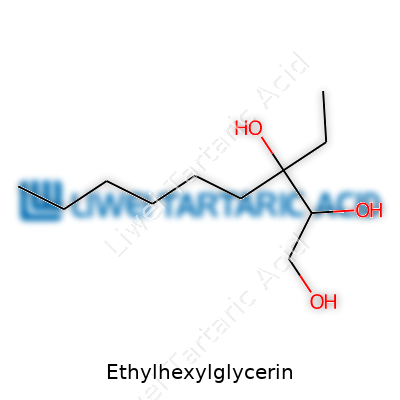
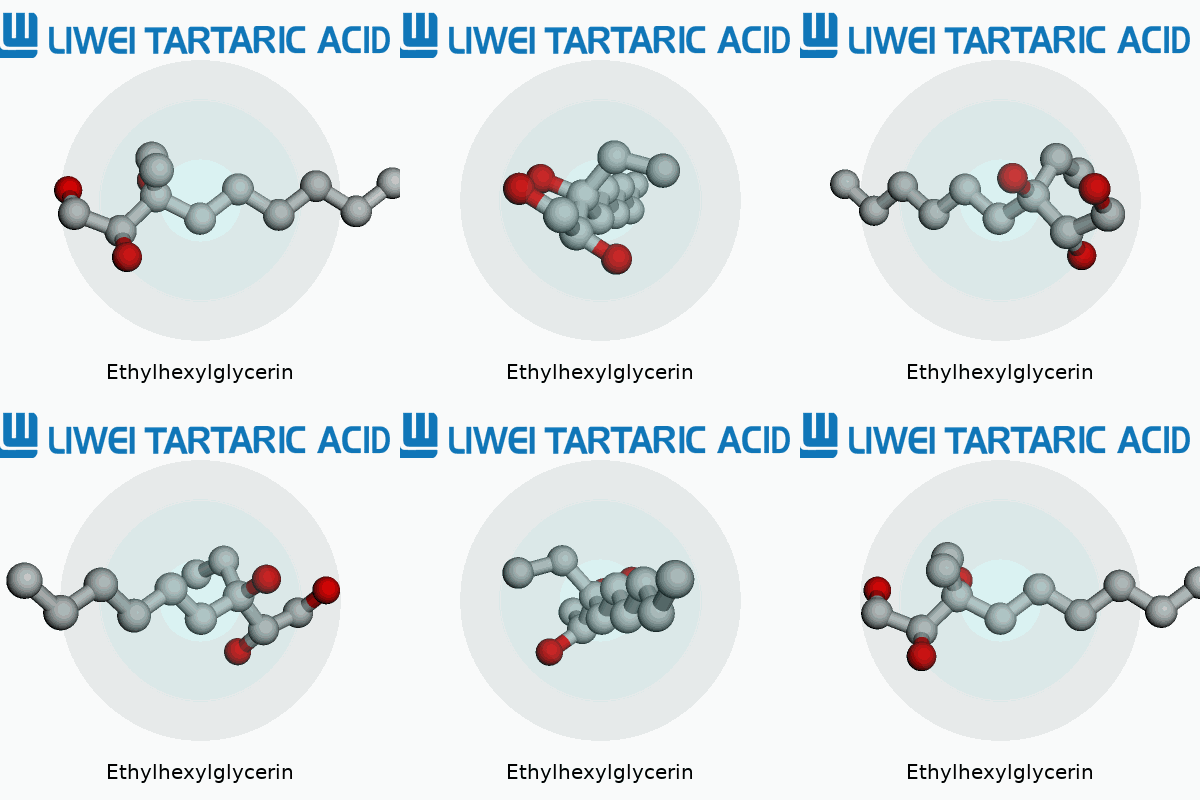
In terms of physical makeup, ethylhexylglycerin holds up well during ordinary processing. It has a molecular formula of C11H24O3 and weighs in at a molecular mass of 204.3 g/mol. The liquid carries a faint sweet scent and doesn’t really show a strong color on its own. Its solubility in water tops out at moderate, and it fares much better sitting in alcohols and oils. The boiling point falls above 130°C, which means it stands up to the heating steps in regular product manufacturing. Since it isn’t volatile, you can rely on it to stay put through standard packaging or shipping. The chemical nature—being a glyceryl ether—lets it hold an edge in preventing bacteria and yeast from getting comfortable in a finished product.
In most markets, technical sheets present ethylhexylglycerin in concentrations ranging from 15% up to 99% active ingredient. Buyers will spot it listed as “Ethylhexylglycerin” on ingredient labels, or under its INCI name, which stands for International Nomenclature of Cosmetic Ingredients. European Union guidelines require manufacturers to list it in the order of descending concentration, meaning you’ll typically find it toward the middle or bottom of ingredient lists. Product specifications include clarity, moisture content below 1%, and a pH that sits between 5 and 7. Tight control of these parameters keeps the ingredient performing as promised and helps prevent negative surprises once it goes into a finished good.
Manufacturers start with vegetable-derived glycerin and react it with 2-ethylhexanol using an etherification process. This step needs careful attention to temperature and pressure so as not to scorch the raw materials. After reaction, purification runs by distillation remove impurities, delivering a clean product that stands up to international safety reviews. Most reputable sources emphasize using renewable raw materials and minimizing waste streams, meeting growing consumer demand for greener chemistry. Consistency in synthesis impacts performance, so high-quality manufacturers bottle-test for color, odor, and functionality at every batch before the material moves into a warehouse or onto a reformulation bench.
Ethylhexylglycerin stands out because it keeps its structure stable across a wide pH range and doesn’t react with the families of surfactants, emollients, or preservatives in most personal care blends. Still, in rare conditions—like high temperatures paired with strong acids or alkalis—the molecule can hydrolyze back into glyceryl ethers and 2-ethylhexanol. Its main claim to fame comes from its role as a “preservative booster,” making standard antimicrobial ingredients more effective at much lower levels. This boosting action comes from subtle interactions with microbial cell membranes, “softening up” the defense so other preservative agents can finish the job. Scientists have looked into ways to link ethylhexylglycerin with other glyceryl esters or caprylyl-based structures, searching for further boosts in safety or performance, but few such modifications have made it to commercial shelves yet.
In technical literature and on packaging, ethylhexylglycerin shows up under a clutch of names. Sometimes you’ll read about “2-ethylhexylglycerin,” a nod to its side chain. Other common synonyms include 1-Glyceryl Ether, Glyceryl Mono-2-ethylhexyl Ether, or the shorthand EHG. For branded versions, ingredients suppliers use tradenames such as Sensiva SC50 (Schulke & Mayr), Euxyl PE 9010 (a blend with phenoxyethanol), and Lexgard (Inolex). Consumers will also see it in the same label neighborhoods as phenoxyethanol, parabens, or caprylyl glycol, since these ingredients often work together for preservation and skin feel.
Ethylhexylglycerin has landed several thumbs up from health authorities in the EU, US, and Asia-Pacific. Reviews from groups like the Cosmetic Ingredient Review board back its safety at concentrations up to 1% in rinse-off and leave-on applications. Irritation rates sit far behind older preservatives such as methylisothiazolinone. That said, rare cases of skin sensitivity have shown up in patch tests, almost always among those with histories of eczema or overuse of scented products. Personal experience shows that avoiding products with ethylhexylglycerin around broken skin works best for at-risk folks. Manufacturers must meet standards set by global bodies like ISO 22716; this covers Good Manufacturing Practices, ensuring the material comes out pure, clean, and consistent from facility to facility. Regular audits and batch traceability have become non-negotiable for global distribution.
Looking at store shelves, ethylhexylglycerin fills roles in facial care, body lotions, deodorants, baby wipes, and sunscreens. Many eco-friendly baby wipe brands depend on it to limit exposure to traditional preservatives. In deodorant and antiperspirant formulas, the chemical throws a one-two punch: it fights odor by tackling bacteria, and it helps keep the formula feeling smooth. Make-up removers and micellar waters also pick up ethylhexylglycerin, where it balances cleansing action and skin comfort without heavy perfumes. The laundry list of uses stems from the molecule’s compatibility with almost every type of surfactant, emollient, or oil-soluble vitamin. For formulators who dodge parabens or formaldehyde donors in favor of gentler alternatives, ethylhexylglycerin steps up as both a reliable preservative booster and a functional skin conditioner.
Latest research highlights ethylhexylglycerin’s role not just as a technical workhorse but as part of a push toward “cleaner” labels and safer daily care. Independent academic studies back up benefits long touted by ingredient suppliers, with results showing little to no mutation risk or hormone effects. Some teams have probed the molecule’s interactions with human keratinocytes, giving clues that it can enhance skin hydration without clogging pores. Innovation teams are experimenting with pairing ethylhexylglycerin with natural-origin extracts or eco-certifiable emollients, aiming at the swelling market of “naturally derived” claims. Clinical trials in recent years surveyed sensitive-skinned volunteers, contributing more nuanced pictures about its real-world tolerability. My own interactions with R&D circles reveal a lively conversation around combining it with ultra-low cosmetic doses of new preservation systems, all trying to keep ahead of shifting regulations and rapidly rising consumer knowledge about what goes into their personal care routines.
Among synthetic personal care ingredients, ethylhexylglycerin stands out for its robust toxicological track record. Standard oral, dermal, and inhalation toxicity studies in rodents and cell lines repeatedly show low acute and chronic toxicity. Human patch studies, including repeated open application tests, often use higher-than-label concentrations to confirm that real-life use rarely provokes reactions. The European Chemicals Agency classifies it as not bioaccumulative and not persistent in the environment, so worries about environmental build-up stay low on the risk register. In rare circumstances, especially for workers handling the raw ingredient in concentrated forms, strict gloves and ventilation cut down any risk for respiratory or skin irritation. Environmental scientists continue tracking breakdown pathways in waste streams, but so far, findings suggest routine wastewater plants can handle trace residues without trouble for downstream aquatic life.
Ethylhexylglycerin keeps earning its keep by meeting the changing demands of the cosmetics industry and end-users alike. Ingredient developers keep looking to hybridize its preservation power with botanical boosters so that more formulas can ditch controversial actives. The biggest opportunity sits in expanding its use in medical and pharmaceutical fields, such as wound care gels or ophthalmic solutions, where gentle yet potent antimicrobial action remains in high demand. As climate change affects ingredient supply chains and consumer preferences push for planet-friendly products, manufacturers who can guarantee a renewable feedstock with super-clean purity profiles will command attention. Digital advances in formulation technology have made it easier to predict and validate ingredient behavior, so a new generation of chemists is taking up the challenge to unlock even more benefits from this once-humble molecule. All industry signs point to a busy future for ethylhexylglycerin—less about just “preserving” and more about supporting safe, sustainable, and trusted products for a broader swath of daily life.
You pick up a new moisturizer at the drugstore, skim the back, and spot a long, winding name: ethylhexylglycerin. The label brags about being free from "harsh preservatives." What’s the deal with this tongue-twister ingredient? It shows up everywhere these days, from face serums to cleansing wipes. People often talk about preservatives like they’re the villain in your bathroom cabinet, but anyone who's found fuzzy mold in an old jar knows that going preservative-free comes with risks.
Ethylhexylglycerin stands out because it helps keep products fresh. Unlike traditional preservatives, this one doesn’t carry the same baggage as parabens or formaldehyde releasers. Most dermatologists, supported by years of published research, agree that it’s gentle on the skin. Regulatory agencies such as the FDA and European SCCS have given it a green light for use in cosmetics at low concentrations. Adding it to products lowers the chance of nasties like bacteria and yeast setting up shop in your lotion. Cleaner products mean fewer infections and skin flare-ups.
My own experience working with cosmetic startups showed me that ethylhexylglycerin does some heavy lifting behind the scenes. It stops microbes, but it also helps fend off the smells that can sometimes creep in when water-based formulas age. This ingredient keeps deodorants smelling fresh longer without relying on strong artificial fragrance. For folks with sensitive skin, it often takes the place of alcohol-based ingredients, which means less stinging and redness.
Companies often pair ethylhexylglycerin with phenoxyethanol. This duo creates a broad defense against bacteria and fungi. It works by weakening the cell walls of these microbes, which stops them from multiplying. This combination protects both the product in the bottle and your skin. Synthetic preservatives might provoke allergic reactions in some people, but studies from prominent allergy clinics point out that ethylhexylglycerin rarely causes trouble.
People want skincare that doesn’t spoil after a few weeks, but they don’t want scary chemicals. Today’s shoppers read ingredient lists, sometimes with a skeptical eye, influenced by internet myths and clean beauty trends. Choosing products that use ethylhexylglycerin lets brands deliver long shelf-lives without loading formulas with harsh stuff. Consumers worried about breakouts or allergic reactions also find some relief in this switch.
Not all risk disappears, though. Everyone’s skin is different, and some can still react to even the mildest ingredients. Reading patch test results and published reviews from trusted medical journals, shoppers find that problems with ethylhexylglycerin stay rare. The Cosmetic Ingredient Review Expert Panel has looked into its safety multiple times, setting recommended usage amounts well below levels known to cause harm.
Skincare trends keep pushing for formulas that last and feel comfortable on raw, sensitive complexions. Ethylhexylglycerin meets this demand better than most traditional options. Chemists lean into this ingredient because it gets the job done without overcomplicating things or inviting unnecessary drama for the skin. As science keeps advancing, other options may come, but for now, this one offers a safe way to keep products stable and enjoyable to use.
Every time a new product lands on my bathroom shelf, I grab the box and scan for names I can’t pronounce. Ethylhexylglycerin appeared on a moisturizer I tried during a winter cold-snap. The cream seemed gentle, so I wanted to know whether this ingredient gets a green light for sensitive skin or raises a red flag.
Ethylhexylglycerin appears most often in lotions, serums, and sunscreens as a preservative booster. Companies turn to it because it helps prevent products from going moldy and also acts as a skin conditioner. It’s not the hero ingredient, but it shows up in the supporting cast.
This compound works as a mild surfactant, so it also gives formulas a silky feel. Brands like it because they can use less traditional preservatives, such as parabens, if ethylhexylglycerin is inside. Less concern for spoilage, smoother skin feel — that has made it a go-to for product formulators.
Research tends to back up its reputation for being mild. Dermatology journals and independent panels, like the Cosmetic Ingredient Review in the US and the European Scientific Committee on Consumer Safety, have looked at the data. They give this ingredient a thumbs-up for use at levels under 5 percent.
Most experts agree that ethylhexylglycerin irritates skin less often than preservatives like methylisothiazolinone or parabens. In practical terms, that means fewer cases of contact dermatitis in people who use products with this ingredient. That appeals to folks with sensitive or reactive skin, myself included.
As someone who’s spent years patch-testing creams and serums after unexplained breakouts, I’ve kept notes on what triggers issues. Ethylhexylglycerin rarely landed on my list of culprits. Friends with eczema or rosacea have told me similar stories. They’ve rotated through dozens of products and found this ingredient didn’t usually start flare-ups.
Dermatologists I’ve met say the same. Dr. Joshua Zeichner, for example, told Allure magazine that ethylhexylglycerin causes allergy in a very small fraction of people. Those reactions look like itching, redness, or bumps, and show up mostly in people with pre-existing skin conditions or a history of preservative allergy.
No ingredient works for everybody. Rare cases of allergy get reported every year — in Germany, for instance, patch test clinics mention it as a possible cause for hand eczema. These are outliers, not the rule. Most trouble starts when someone already has cracked or compromised skin that lets sensitizing ingredients slip past the barrier more easily.
If you’re worried about sensitivity, try a small dot on your wrist for a few days before slathering it everywhere. Take note of any burning or itching that lingers for more than a few minutes. Sticking to fragrance-free, hypoallergenic formulas limits your risk further, since those products often leave out other irritants that can confuse the issue.
Reading the label, checking the order of ingredients, and knowing your own skin history — these steps make navigating formulas less of a mystery. Ethylhexylglycerin often flies under the radar compared to flashier, newer additives. Its track record with sensitive skin, backed by clinical data and personal stories, means it remains one of the more trusted names in your moisturizer’s ingredient list.
Ethylhexylglycerin pops up in plenty of personal care products. From shampoos to face washes, you can find it helping formulas stay fresh longer. It’s a preservative booster—often paired with other agents to keep bacteria and mold away. People gravitate toward it because products advertise it as a gentler alternative to old-school preservatives, such as parabens.
Imagine testing out a new moisturizer, expecting only silky skin, but instead, you notice a sting or redness. Stories like these echo through online forums. Clinical experience shows real but infrequent cases where ethylhexylglycerin sparks trouble—itchiness, mild rashes, sometimes a more stubborn irritation.
Dermatologists have documented most reactions happening in folks with already sensitive skin or those dealing with eczema or contact dermatitis. A large study from the North American Contact Dermatitis Group flagged this compound as a rare allergen. In a review of 28,000 patch tests, less than 1% responded with a true allergy. For most people, using products containing this ingredient won’t change how their skin feels. But, if you have a history of reacting to fragrances or preservatives, there’s a chance it could trip your system.
Shoppers want transparency now more than ever. A long, unpronounceable word in the ingredient list makes people pause and wonder: Should I worry about putting this on my face? Experiences in the dermatologist’s office—watching patients spend time and money chasing down the source of a rash—show the value in double-checking labels. People who know what ingredients their skin can handle save themselves a lot of discomfort.
Ethylhexylglycerin may slip by for many without any problem, but allergies don't pick and choose based on company promises. Once someone’s skin decides it doesn’t like something, that truth sticks until the ingredient comes off the shelf or the routine changes.
Most people get away with using products containing ethylhexylglycerin and never give it a second thought. But if you spot irritation on your skin, pausing to look at ingredient lists pays off. Patch testing with your doctor can narrow down the exact cause—it might not even be ethylhexylglycerin that’s to blame. Most skin experts agree that jumping to conclusions isn’t useful, but ignoring ongoing redness or itch rarely leads anywhere good, either.
The rise of “sensitive” product lines shows brands are listening. Manufacturers see people asking questions about ingredients and want to answer those concerns. The best defense for anyone: stay curious, read product labels, and talk to a skin professional if something feels off. Companies and regulators can also push for more thorough reporting and larger studies. Keeping track of patterns helps everyone—shoppers and health professionals alike—make smarter choices down the line.
A lot of talk swirls around the bathroom shelf, especially as more people scan ingredient lists. Ethylhexylglycerin starts popping up in everything: serums, deodorants, even wipes for your dog. Some brands call it “naturally derived” and others use the word “synthetic.” So, what’s real? Does it come from nature or from a lab?
Ethylhexylglycerin doesn’t just drip out of plants in its finished form. Manufacturers start with raw materials like vegetable glycerin. Glycerin itself has roots in plants such as coconut or palm. Then chemistry steps in. Through chemical reactions, they attach new bits to the glycerin, tweaking it until they get ethylhexylglycerin. Now, people ask if this lab process means the ingredient leaves its “natural” badge at the door.
The truth is, ethylhexylglycerin fits into a tricky space. Famous clean beauty brands label it as “naturally derived.” That basically means it began from natural materials but went through human-driven reactions to make it work harder in a formula. Scientists call this approach “nature-identical,” though no coconut on the branch will yield ethylhexylglycerin unless you send it through a factory first.
Many folks, myself included, have turned to ingredient research after developing a rash or chasing after that ever-elusive “clean” label. Safety comes into play in a big way. The Cosmetic Ingredient Review and the European Commission both green-light ethylhexylglycerin for personal care, calling it low-risk for most people. A well-run lab can make it consistently pure, avoiding contamination issues you sometimes see with simple plant extracts.
What makes ethylhexylglycerin popular is its ability to boost preservatives. It helps products last longer, cutting down on waste from beauty items gone bad. I’ve seen plenty of family members react to harsher synthetic preservatives, but products featuring ethylhexylglycerin often skip the irritation. It’s also gentler on surfaces like the skin than older solutions such as parabens or formaldehyde donors. This shift matters as eczema, allergies, and sensitive skin rise year over year.
The beauty industry throws out buzzwords to catch shoppers’ eyes. “Natural,” “clean,” and “chemical-free” fill advertisements. Here’s my experience: ingredients rarely fit into tidy boxes. Just because a label touts “natural” doesn’t promise safety, effectiveness, or even environmental kindness. My own switch to “green” products didn’t solve everything—I learned ingredients deserve context.
For someone seeking truly plant-only formulas, ethylhexylglycerin doesn’t quite check the box, since refining and synthesizing turn that veggie oil into something unique. But for buyers who want science-backed safety and performance, it still comes from an understandable starting place.
Clarity in labeling matters. As a consumer, misleading claims on “naturalness” have wasted my time and money. A simple, transparent story about how an ingredient is made and why it’s used would help more than any green logo. People trust brands that share complete information about their ingredients and methods.
Ethylhexylglycerin exists at that crossroads where modern chemistry meets raw nature, offering a reminder that a little homework and skepticism go a long way when picking products off the shelf.
Take a look at the label of almost any modern lotion, cleanser, or even mascara. Ethylhexylglycerin often shows up. Many folks spot it under “other ingredients” and breeze right past. For cosmetic formulators, though, its role matters a lot. Ethylhexylglycerin doesn’t act as a powerhouse preservative all on its own. Instead, it works more like a gifted backup singer who can change the tempo and mood of a song. It assists well-known preservatives, giving them a boost and filling out the safety net against unwanted bacteria or fungus in that jar of face cream.
Think about any kitchen recipe. Adding salt or pepper can brighten up a dish, but the taste truly comes alive when the ingredients blend well together. Preservatives in cosmetics work under a similar principle. Single ingredients rarely carry all the protection a formula requires. Ethylhexylglycerin pairs particularly well with preservatives such as phenoxyethanol or parabens. These combos slow down mold and bacterial growth, so products don’t spoil weeks after you open them. Research from the International Journal of Cosmetic Science found that phenoxyethanol performed better when teamed with ethylhexylglycerin than alone. The microbial “kill rate” went up in multiple studies, which means fewer headaches for consumers who count on safety from the products lining their bathroom shelves.
I worked for a small indie skincare brand during a summer internship. Our products sat on store shelves without refrigeration and traveled in hot delivery trucks. We didn’t have access to high-powered chemical labs, so we relied on dependable ingredient mixes. Our chemist explained that using ethylhexylglycerin alongside phenoxyethanol gave us broader protection across bacteria and fungus. At one point, we tried leaving out ethylhexylglycerin—batch after batch failed micro testing, causing delays and big losses. With the right combo, we passed stability tests, leading to fewer recalls and happier customers.
Using multiple preservatives in a formula offers a safety cushion. Rather than leaning too much on a single chemical, mixing ethylhexylglycerin with others means formulators can reduce the levels of each. This matters for people with sensitive skin or for brands hoping to use fewer harsh chemicals. Studies back up this approach. For example, a 2022 survey from Cosmetics and Toiletries showed that mixing these ingredients cut down on skin irritation compared to higher doses of single agents. Consumers often worry about exposure to unnecessary chemicals, especially after media stories about banned preservatives or allergic reactions. Smart combinations can offer the same level of safety with fewer worries.
Many brands today focus on “clean” beauty – short, pronounceable ingredient lists and a healthy respect for consumer wishes. There’s still real science behind every cream or serum, though. Choosing preservatives based just on trends can backfire without solid testing. Formulators can test smaller batches, try different blends, and listen to customer feedback. Investing in better preservative combinations can save money over time and build lasting trust.
Ethylhexylglycerin remains a reliable teammate for many preservatives in modern cosmetics. Companies, chemists, and shoppers all benefit from formulas that balance safety, performance, and skin-friendliness. That kind of teamwork doesn’t just extend a product’s shelf life—it protects every face or hand that uses it.

Providing high-quality chemical products and logistics solutions for global trade partners.



