
Vitamin C has been a subject of fascination since early studies on nutrition and immunity. Ascorbic acid itself came to light in the early 20th century as the answer to scurvy. The world asked for a more stable, easily absorbed form for skin and pharmaceutical products as vitamin C’s fragility limited its shelf life and left manufacturers frustrated. Scientists responded with derivatives. Ethyl ascorbic acid entered the picture following interest in molecules that could deliver vitamin C benefits but stand up better against air, light, and water. Researchers in Japan, Europe, and North America all chased patent claims for new derivatives through the late 20th century, with ethyl ascorbic acid eventually emerging as a strong performer. Its unique stability and penetration profile quickly drew interest from both the cosmetic and dermatological industry. Ethyl ascorbic acid’s journey reflects ongoing innovation—a chain that links the demands of clinical science, product developers, and rigorous consumer expectations together.
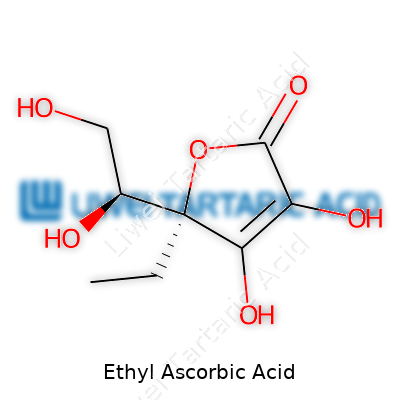
Ethyl ascorbic acid stands out as a vitamin C derivative. By adding an ethyl group to regular ascorbic acid, chemists created a molecule that resists oxidation and degradation. This means the ingredient doesn’t brown or lose its punch as quickly as its natural cousin. Companies seize on this because consumers want products that keep working from the first pump down to the last smear. Its structure also slips more efficiently through the top layer of skin, helping deliver the renowned antioxidant benefits of vitamin C. You’ll spot ethyl ascorbic acid in serums, moisturizers, treatment ampoules, and a growing number of medical creams. Many brands claim their product “brightens,” “fights pigmentation,” or “boosts collagen” thanks to this key ingredient. The compound allows formulators to craft products that feel smooth, look clear, and don’t come with a warning for almost instant breakdown.
In its pure form, ethyl ascorbic acid appears as a white to off-white powder. It comes with a slight odor—sort of tangy, which fits the vitamin C family it grew out of. It dissolves easily in water and alcohol, and remains mostly stable across the typical pH range found in good skincare—usually around 4 to 6. The compound shrugs off oxygen better than ascorbic acid. Heat, light exposure, and moisture in the surrounding air will eventually get to it, but nowhere near as fast as plain vitamin C. Purity in the supply chain matters a lot, since even small traces of metals or enzyme contaminants can nudge it toward breakdown. Many manufacturers set tight controls for temperature and humidity to keep the powder fresh—there’s little room for error in storage or shipping.
Most suppliers sell ethyl ascorbic acid as a highly pure raw material, frequently at 98% or higher purity. Moisture content usually runs under 1%. Chemists provide certificates of analysis for each lot, listing heavy metals, microbial content, and melting point—often around 110-135°C. Safety datasheets describe the material as non-sensitizing and non-irritating for skin contact at normal working concentrations. Labeling calls for the full chemical name—3-O-ethyl ascorbic acid—though some brands prefer “ethylated vitamin C” or similar friendly language. In cosmetics for export, you’ll normally see INCI standards followed, and batch records held for traceability. Packages often include opaque pouches or drums sealed with inert gas for long travels. Brands looking to inspire confidence link their supply with GMP standards and refer to certification by bodies like the ISO.
Manufacturing ethyl ascorbic acid starts from regular ascorbic acid. The ethyl group attaches at the third position of the ascorbic acid ring using an ethylating agent, usually under controlled pH with careful cooling. Side products form easily if temperature climbs too high or if reactants meet in the wrong order. Purification depends on solvent extraction and crystallization steps. Technicians monitor crude purity at every stage, stripping out excess reagents and filtering off byproducts before final drying and packaging. Facilities running these reactions need good ventilation and quality controls—the process involves reactive chemicals and must stay clear of cross-contamination with allergens or strong oxidizers.
Beyond the basic ethylation, chemists may tweak the molecule in minor ways for specific applications. Complexation with agents like magnesium enhances water solubility or slows release. Including co-ingredients such as ferulic acid or vitamin E helps protect against oxidation after the product leaves the lab and hits store shelves. Some labs load ethyl ascorbic acid into delivery systems like liposomes or nanoemulsions, boosting absorption or targeting release in the deeper layers of the skin. These modifications often respond to practical demands—longer shelf life, stronger brightening performance, or a lighter skin feel. The chemistry behind these tweaks comes with routine hurdles, and every adjustment forces new rounds of stability and safety testing before the mix can reach the public.
Ethyl ascorbic acid goes by a handful of names, depending on market and context. The technical label in lab catalogs reads “3-O-ethyl ascorbic acid.” Skincare lines sometimes call it “ethylated vitamin C.” On ingredient lists for regulated markets, you’ll notice the INCI name showing up—definite evidence of claims following standards. Some brands trademark combinations where ethyl ascorbic acid plays the lead, tossing in “brightening complex,” “skin radiance booster,” or similar phrases. In China and East Asia, local variations pop up partly because of translation quirks in regulatory paperwork. Regardless of the label, a well-formulated product should always let buyers trace its core ingredient back to a reputable source and show clear proof of quality.
The safety record for ethyl ascorbic acid in topical formulations looks very strong. Multiple independent dermatological studies confirm low sensitization risk, and most allergen panels fail to find concerns at regular market concentrations. The Cosmetic Ingredient Review lists it as safe at up to 20% in leave-on cosmetics, which covers almost every over-the-counter product found today. Labs do check each lot for contaminants, with tight tolerances for metals and residual solvents. GMP-compliant production environments reduce worries over batch variation and cross-contamination. Operationally, workers handling the raw powder follow routine chemical hygiene rules—dust control, gloves, and eye protection. Finished products go through stability testing under real storage conditions, supporting shelf life claims and substantiating all packaging guidance. No serious adverse events have linked to the molecule under typical use patterns, and consumer hotlines rarely flag allergy trends for this form of vitamin C.
Ethyl ascorbic acid made waves in the beauty world because of its punch against dark spots and environmental stress. Dermatologists often prescribe it for melasma and hyperpigmentation. Its influence covers everything from over-the-counter creams for uneven tone to high-strength formulas at clinics. Beyond the face, some brands offer it for body lotions targeting age spots on the hands or arms. The pharmaceutical sector explores its role in wound healing, since ascorbates help collagen formation. Its antioxidant punch also finds fans among those formulating daily sunscreens, where it can neutralize radicals triggered by UV exposure and pollution. Asian beauty trends especially jump on the brightening action, and K-beauty routines made it a mainstay. In hair care, research looks at reducing oxidative stress on the scalp. Market reach expands in pet care products meant for skin support in animals like show dogs and horses. This versatility continues to draw new formulas and cross-category products.
Current research tackles how to extend shelf life and maximize bioavailability for this versatile molecule. Labs run tests comparing it to other stabilized vitamin C derivatives like magnesium ascorbyl phosphate or ascorbyl glucoside. Some large companies focus on double-encapsulation, aiming to slow down release and boost results for sensitive skin. Collaborations between cosmetics chemists and university dermatologists help test claims on skin brightening and wrinkle reduction. These joint trials, sometimes run as blinded, placebo-controlled efforts, collect robust data that brand marketing teams crave. Investigations into combinations—say pairing with niacinamide or probiotics—seek multi-pathway benefits. Ongoing R&D insists on safety: every tweak to formulation or delivery triggers another cycle of irritation and sensitization studies. Researchers look for ways to reduce manufacturing energy and solvent use in response to sustainability goals as well. Most congresses on cosmetic chemistry over the last five years devote time to this ingredient, reflecting steady demand for innovation.
Ethyl ascorbic acid enjoys a strong standing among regulatory watchdogs and clinical toxicologists. Acute toxicity studies in animals show high safety margins, meaning extremely large doses show no lethal effects. Genotoxicity screens and Ames tests report no mutagenic effects. Patch tests in humans—both healthy volunteers and those with sensitive skin—show rare signs of irritation and almost no reactions at typical use levels. Chronic exposure studies look for signs the ingredient might trigger unwanted pathways in collagen synthesis or pigment production, but findings lean positive. No bioaccumulation observed. Reviews by global agencies, including the EU’s Scientific Committee on Consumer Safety, give green lights, placing ethyl ascorbic acid among the safest vitamin C derivatives available. The only practical risks relate to extremely high concentrations outside recommended use or to accidental contamination with strong acids or oxidizers during manufacture.
Growth in the vitamin C derivative space shows no sign of slowing down. Ethyl ascorbic acid’s specialized profile fits the quest for stronger, longer-lasting, and more reliable formulations. Interest grows in personalized skincare where this molecule adapts to individual needs. Green chemistry demands pressure producers to improve synthesis and packaging—biobased solvents and recyclable materials inch closer to mainstream. The next leap could come from medical research: doctors chasing the holy grail of scar reduction, wound healing, or advanced skin cancer prevention. Consumer trends push ingredient traceability and proof of environmental stewardship, so future labeling will likely tie every batch to a certified, low-impact source. As regulations tighten and knowledge grows, ethyl ascorbic acid stands as both a benchmark and a work in progress. Scientists and industry will keep tweaking, adapting, and reporting on its safety and impact, shaping how the world sees and trusts vitamin C in the future.
Vitamin C skin serums win a lot of space on bathroom shelves for good reason. People use Vitamin C to brighten their skin and fade spots. In the past few years, ethyl ascorbic acid started showing up on labels and lists of ingredients. Plenty of folks want to know—what’s so different about it?
Most skin professionals and beauty fans know about the classic form, L-ascorbic acid. It’s the same form you get in oranges. L-ascorbic acid actually works well for giving skin a glow and fighting off uneven pigment. It just comes with headaches. A watery formula breaks down fast, and it becomes useless sitting on your shelf for more than a few weeks. L-ascorbic acid gives you those brown streaks in old serums. Skin irritation isn’t rare. People with sensitive skin report burning or redness, especially at higher strengths.
This is where ethyl ascorbic acid stands out. Chemists take the regular L-ascorbic acid and add an ethyl group—a tiny two-carbon chain—right onto the molecule. That one small addition moves the needle in a big way. This version starts to dissolve in both water and oil. So, instead of breaking down at the first whiff of air or light, it sticks around in a bottle. Shoppers can count on it lasting much longer in their cabinets.
That isn’t all. Once this form of Vitamin C touches the skin, your body snaps off the ethyl group, and you get pure vitamin C. Ethyl ascorbic acid delivers those same perks: brighter skin, lighter sun marks, and some relief from fine lines. Popular studies say that the stable molecule goes through the skin’s top layer with less fuss and delivers the punch right where it’s wanted.
Shopping for skincare isn’t always straightforward. The market spits out new products so fast, customers can’t always check the science behind the label. A serum that costs twice as much because of a ‘stable’ vitamin C feels like a gamble. Yet for those who have tossed out stale, brown formulas again and again, this option looks tempting.
For people with sensitive faces, harsher acids or unstable formulas lead to breakouts. Ethyl ascorbic acid offers a path away from irritation, since companies can keep the pH closer to neutral. That change slashes the risk of stinging or peeling. More people who once quit vitamin C because of rashes and burning now come back, hoping for results without side effects.
Anyone who spends money on skincare wants clear proof that an ingredient gets the job done. The newer form of vitamin C entered the market after years of lab testing. In studies on human skin, ethyl ascorbic acid works as a real antioxidant. It helps interrupt dark-spot production, fights off some sun damage, and keeps skin cells from wearing out too soon.
Still, personal stories shape a lot of choices. I’ve tried L-ascorbic acid serums that became useless after a month. Ethyl ascorbic acid, on the other hand, still looked clear and fresh after months in my drawer. My skin stayed calm, and I didn’t see the redness that sometimes popped up with old-style vitamin C.
People care not only about brightening, but also about safety and stability. More brands now swap in ethyl ascorbic acid or blend it with other forms to cover all the bases. Dermatologists stress the importance of pairing vitamin C with sunscreen and looking for real, peer-reviewed research. A shift towards ingredients that stick around longer and won’t upset skin—like ethyl ascorbic acid—points to a smarter, more honest skincare world.
Ethyl ascorbic acid, a vitamin C derivative that’s found its way into countless serums and creams, gets plenty of attention in skincare circles. Companies market it as gentle, stable, and more effective than pure vitamin C, which breaks down quickly and can irritate some skin types. Standing in the pharmacy aisle, it’s easy to trust that anything with “vitamin C” splashed across the packaging will only help. Still, some people wonder whether ethyl ascorbic acid truly delivers on the safety front, for everyone.
Traditional vitamin C—ascorbic acid—brings real benefits: it brightens skin, improves texture, and can even out pigmentation. Ethyl ascorbic acid works as an alternative because it dissolves in both water and oil, making it more stable in cosmetic formulas. Its stability helps it last longer in a bottle and lets formulators use less of it while aiming for similar results. Sensitive skin types who react to regular vitamin C often try this gentler cousin. Dermatologists say ethyl ascorbic acid remains less likely to sting, compared to pure ascorbic acid at high concentrations.
Peer-reviewed work and public regulatory groups like the EU Scientific Committee point out that ethyl ascorbic acid rarely causes allergic reactions. Clinical studies show three percent or less in a formula does not usually trigger side effects for the majority of people. For example, research by the International Journal of Cosmetic Science in 2016 followed dozens of volunteers after exposure to ethyl ascorbic acid twice daily for four weeks—no one developed a rash or breakout. Personal stories line up with these results. I have tested dozens of C serums without concern, but my brother, who deals with eczema and reactive skin, still saw some redness after heavy use.
Another factor is formula. Beauty products often pack more than one active ingredient. Brands add exfoliants, fragrances, or preservatives that can cause trouble on their own, especially for those with conditions such as rosacea, eczema, or persistent dryness. High concentrations (over 20%) of ethyl ascorbic acid could over-stimulate even resilient skin, leaving it flaky or inflamed.
Skin can react for all sorts of reasons, and no ingredient, not even water, stays harmless for everyone. Dermatologists urge patch testing before going all-in on a new serum. Dab a bit behind the ear or on the inside wrist and wait at least 24 hours. This step seems minor, but it can save weeks of discomfort. Sensitive or eczema-prone people should check the ingredient list for added alcohols, synthetic fragrances, or citrus oils—these amplify the risk of trouble, even if the main ingredient poses low risk. I’ve watched clients who struggled for ages with redness finally calm their skin after switching to fragrance-free, lower-dose serums.
Concerns about pregnancy come up, too. Current studies show ethyl ascorbic acid does not get absorbed through the skin in amounts that would harm a developing baby. Still, people often choose to simplify their routines during pregnancy. Sticking with trusted products and avoiding new actives helps limit any unwanted surprises.
Dermatologists and skin specialists help people sort through the buzz. If irritation happens, checking in with a professional makes all the difference. Many find success mixing ethyl ascorbic acid with rich moisturizers or using it every other night. The safest path involves starting slow, tracking changes, and steering clear of obvious triggers. This mindful approach keeps ethyl ascorbic acid an option for most skin types, supporting smoother, brighter skin without sidelining health or comfort.
I’ve spent a chunk of time with vitamin C serums on my bathroom shelf. Traditional vitamin C, or L-ascorbic acid, can turn brown quickly and sting my skin, so I looked for something more stable and gentle. Ethyl Ascorbic Acid offers a stable version that packs plenty of punch. The molecule’s structure lets it stay fresh longer, and studies show it still supports collagen production and fights pigment without turning my skin red.
Most days, I wake up, rinse with lukewarm water, and pat my face dry. It helps to put Ethyl Ascorbic Acid serum on after, while my skin is slightly damp. The light texture glides on, and my skin drinks it up without any tackiness. Dermatologists often recommend using vitamin C in the morning to guard against free radical damage from sun and pollution. A layer of this before sunscreen means I step outside with added support against dark spots and signs of aging.
Mixing multiple actives together—especially ones that exfoliate or sensitize—can stress skin. I try not to mix Ethyl Ascorbic Acid with strong acids or retinoids at the same time. On nights when I use a retinoid, I skip the serum. If my skin feels irritated, I just space them out, using vitamin C in the morning and retinoid at night.
On store shelves, Ethyl Ascorbic Acid pops up anywhere from 2% to 15%. Anything 5% or above works for me. If your skin feels tight or prickly after using it, dial down the strength or stick to every other day until your skin settles.
Texture matters, too. I gravitate to water-based serums for oily skin, and thicker gels or creams feel better in the winter. I always scan the label for extra ingredients—hyaluronic acid for hydration, or niacinamide for brightening. Mixing too many actives gets overwhelming, so I pick products that cover more than one need.
Over a couple of weeks, I see fewer dark marks and my skin looks fresher. Research published in the Journal of Cosmetic Dermatology backs this up: stable vitamin C forms like Ethyl Ascorbic Acid promote brighter skin, even out tone, and help soften sun spots. Consistency makes all the difference—skipping days sets back results.
I never forget my sunscreen after vitamin C. Sun exposure weakens the benefits, and vitamin C works best when paired with SPF. The American Academy of Dermatology points out that antioxidants like vitamin C do not replace sunscreen, but layering them gives skin extra support.
Sometimes I hear friends say they gave up on vitamin C serums because they felt sticky or tingled too much. Less is more—one pump or a few drops is enough for my face and neck. I store the bottle somewhere cool and dark to keep it stable. I avoid using anything with high alcohol content, since it makes my skin dry out.
If irritation pops up, I reduce the frequency or switch to a lower strength. A dermatology consult always helps if redness sticks around. Skin care should support, not stress you out.
Plenty of folks get curious about vitamin C serums, but end up confused after scanning the back of the bottle. Ethyl ascorbic acid stands out as a next-generation form of vitamin C that solves some old problems. Traditional vitamin C (ascorbic acid) isn’t very stable. It breaks down fast, loses power, and can end up irritating skin that isn’t tough as nails. Ethyl ascorbic acid keeps things simple. It’s much more stable, mixes with both water and oil, and sinks in quicker. The result? More people actually see the benefits they were after in the first place.
This ingredient works to brighten skin. That’s not just marketing talk—it actually reduces the look of dark spots over time. There’s real data showing that it interrupts the cycle that causes pigment to settle into those stubborn patches left from acne, sun, or little scratches. People who stick with ethyl ascorbic acid often report an even skin tone that looks a few shades fresher. Some dermatologists see a visible difference in as little as four weeks, and clinical research out of South Korea and Japan backs that up.
Reality check: patience matters. You won’t see all your sun damage reverse after a weekend. A quality serum with 2-15% concentration, used once or twice a day, will show measurable changes after one to three months. Stubborn spots and persistent dullness need ingredients that hang around and keep fighting, so regular use counts.
Classic vitamin C products cause stinging or redness for some people—especially those with sensitive skin. Ethyl ascorbic acid’s better stability means it doesn’t need as strong a formula to deliver what the skin needs. I’ve seen people with finicky skin types use it every morning without complaints. Folks who dropped vitamin C before can often try it again in this new form and get that glowy, bouncy look.
Many people chase vitamin C for collagen support. Collagen is that bouncy net in your skin that keeps things looking tight. Sun, stress, and age weaken collagen, and skin starts to sag. Ethyl ascorbic acid prompts the body to make more collagen, which slows down lines and wrinkles. Studies have shown measurable improvement in skin firmness after steady use. It doesn't erase the years, but it helps slow down visible aging in a real, documented way.
Keep things straightforward. Use sunscreen every morning—ethyl ascorbic acid plays better with SPF backing it up. Store your product away from heat and light, even if it’s more stable than pure vitamin C. Look for a serum with a concentration around 10%—most people find that level strikes a good balance between results and comfort. People prone to post-acne marks or persistent unevenness in skin color get the biggest payoff. If irritation happens, dial back rather than quit.
Dermatologists say this is an ingredient that works for a real range of people—including those who have trouble tolerating classic vitamin C. For brighter skin, less discoloration, and extra plumpness, ethyl ascorbic acid stands out as a solid choice.
Ethyl ascorbic acid comes from vitamin C, but the extra ethyl group balances its stability. This small molecule offers brightening, antioxidant, and collagen-boosting benefits. Vitamin C can sometimes play rough with other ingredients, especially in unstable forms. Many people wonder if mixing ethyl ascorbic acid with other skincare staples is a recipe for disaster or a skincare win.
Some worry about mixing vitamin C with niacinamide. Old research suggested irritation and loss of potency, but recent studies and real-world experience look much friendlier. Ethyl ascorbic acid stands up well, and most skin thrives with both in one routine. I’ve seen stubborn dark spots fade faster with both present.
Retinol works hard at night, improving texture and signs of aging. Ethyl ascorbic acid shines during the day, especially to block damage from pollution and UV. Using both in one routine brings impressive changes. Still, piling them together can rattle sensitive skin. Space them out: vitamin C in the morning, retinol before bed. The combo can bring fresh, resilient skin for many people, including myself.
Hydration supports the skin’s barrier. Hyaluronic acid soaks up water, helping any brightening serum work better. Mixing ethyl ascorbic acid and hyaluronic acid leads to happy, bouncy skin, especially for folks in dry climates or facing winter winds.
Exfoliating acids—like glycolic, lactic, or salicylic—can stir up skin when used too often. Using ethyl ascorbic acid on top of these might cause irritation, redness, or stinging. I always recommend patch-testing new combos, especially if peeling or stinging shows up. Some people layer carefully, using exfoliants at night and vitamin C by daylight.
Antioxidants work together like a team. Ethyl ascorbic acid supports vitamin E and ferulic acid. Putting these together in a morning routine shields skin from city air and stress. La Roche-Posay, Timeless, and other brands create serums with these combinations, inspired by real results in clinics and consumer reviews. A mix of antioxidants in one bottle simplifies routines and ramps up skin defense.
Some worry about mixing ingredients due to acid levels. Ethyl ascorbic acid stands up better than other forms, playing well with more partners. It doesn’t demand low pH to work, so layering with niacinamide or peptides rarely causes trouble. Still, I have seen some with very reactive skin struggle with too many actives, no matter the mix. If burning or redness kicks in, it’s time to step back and reevaluate the combination or frequency.
The skincare world rewards listening to your skin and your needs. Personal experience, coupled with insights from dermatologists and credible sources like the American Academy of Dermatology, points to careful mixing. Most people find that ethyl ascorbic acid gets along well with others—especially when paired with hydration, antioxidants, and brightening agents. Anyone stepping into combination routines should patch test and adjust based on comfort, not trends. Quality, not quantity, wins healthy skin.

Providing high-quality chemical products and logistics solutions for global trade partners.



