
Discovery often starts with curiosity about the little things. Diethyl L-(+)-tartrate has roots stretching back to the early development of organic synthesis in the 19th century. Scientists like Louis Pasteur noticed the subtle differences in crystal shapes of tartaric acid salts, eventually leading to the broader recognition of chirality. Over decades, interest in its esters grew as chemists searched for building blocks that mirrored nature's handedness. This compound found its reputation growing in step with the pharmaceutical industry’s advance toward more selective, enantio-pure compounds.
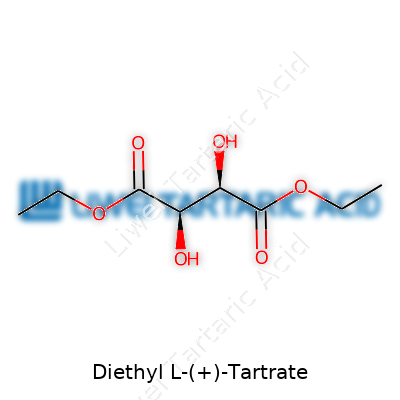
Looking at diethyl L-(+)-tartrate, it isn’t just another chemical on a shelf. Its molecular structure—a derivative of tartaric acid esterified with ethanol—carries significance in how it interacts with other molecules. Production outcomes depend on the purity of both the ethanol and tartaric acid sources, as these impact its later uses. Chemical plants focus on providing high-quality batches, often labeling with details that ensure traceability and foster confidence in research and production environments alike.
Diethyl L-(+)-tartrate appears as a colorless, oily liquid. Its sweet odor sometimes seems out of place during technical handling, yet offers quick confirmation of its identity long before spectroscopy comes into play. The boiling point, hovering near 150°C under reduced pressure, underscores its adaptability in both laboratory and industrial processes. It mixes easily with a range of organic solvents but refuses to mix with water, which keeps separation processes straightforward. Its rotation of polarized light stands as a classic proof of chirality—something anyone with a polarimeter and a basic toolkit can confirm.
Vials and drums of diethyl L-(+)-tartrate typically display the enantiomeric purity, chemical formula (C8H14O6), and a batch code. These aren’t there for show; they help users in regulated fields match the material to strict protocols, from small-batch catalytic screenings to pilot-scale reactions. If you're handling sensitive synthetic steps involving chiral ligands or organometallic complexes, you'll appreciate knowing the water content and trace metal analysis straight away. Clear labeling also supports supply chain transparency, aiding quality assurance from order through delivery.
Most routes to diethyl L-(+)-tartrate rely on acid-catalyzed esterification of naturally sourced L-(+)-tartaric acid with ethanol. Manufacturers use a combination of distillation and liquid-liquid extraction to purify the product. The process gets monitored with regular sampling—gas chromatography standing by for the job. Even today, efficiency rides on the consistent sourcing of starter materials from fermentation laylines, a nod to tradition even as reactors and sensors get smarter.
This compound plays a frequent role in asymmetric synthesis. Think about Sharpless epoxidation, where diethyl L-(+)-tartrate, with titanium isopropoxide and tert-butyl hydroperoxide, guides the reaction toward one enantiomer. Chemists sometimes tweak the ester groups, switching out ethyl for other alkyl chains, to tailor physical properties without losing the essential "handedness." Reductions, hydrolyses, and oxidations often start from this compound, spurring a chain reaction of chiral molecules invaluable in drugs, fragrances, and more.
Walking through catalogs or scouring regulatory submissions, you'll see this ester listed as Diethyl (R,R)-tartrate, L-(+)-diethyl tartrate, or simply DET. Some suppliers brand it under proprietary names, but the structures remain the same. It's the L-(+)- prefix that signals its specific stereochemistry—essential knowledge, as switch the configuration and you risk failed experiments or regulatory headaches.
Diethyl L-(+)-tartrate is less hazardous than many solvents, but labs and plants don't take shortcuts. Personnel wear gloves and goggles, use proper ventilation, and store containers away from strong acids, bases, and open flames. Material safety data sheets (MSDS) get reviewed so accidents like spills or exposure don’t go mishandled. Regulators in the EU and US set exposure limits to protect worker health, and facilities undergo routine inspections, knowing that solid safety culture protects reputations as much as people.
Pharmaceutical synthesis benefits most from diethyl L-(+)-tartrate, especially for producing enantiomerically pure drugs where a misplaced chiral center could provoke drastic side effects. Fine chemical companies leverage its structure in agrochemical intermediates, where selectivity reduces waste and saves cost. Academic labs still reach for it to teach asymmetric catalysis, letting new generations witness chirality’s practical impact. Its role expands into flavor and fragrance manufacturing, which thrive on precisely defined molecules for high-value products.
Research teams keep testing new reactions where this compound might boost yields or selectivity. Journal articles and patents detail how swapping its ester groups or partnering it with novel metal catalysts shapes new synthetic pathways. Efforts to cut waste during synthesis mirror the broad move toward green chemistry, with some projects investigating biocatalytic routes or renewable ethanol sources. As computational chemistry advances, researchers now model interactions at the molecular level, predicting reaction outcomes before a drop even reaches the flask.
Most studies suggest that diethyl L-(+)-tartrate has low toxicity for humans, though any organic solvent deserves respect. Inhalation and skin contact receive attention due to potential irritation. Testing on aquatic organisms assesses environmental impact, since compounds with persistent ester groups sometimes break down slowly in water or soil. Toxicological research connects back to broader regulatory pushes aiming to minimize hazardous byproducts and occupational exposure, especially as production volumes grow worldwide.
Looking ahead, demand rises as industries strive for greener processes and more selective drug synthesis. Scientists look for ways to repurpose renewable feedstocks, aiming to cut the carbon footprint from ethanol and tartaric acid production. Advances in process intensification may streamline purification steps, making production faster and more sustainable. New asymmetric reactions unlocked with machine learning could shift how chemists rely on diethyl L-(+)-tartrate. Ongoing collaboration between academic groups, startups, and established producers steers resources toward scaling safer and more effective synthesis, keeping this once-humble compound squarely at the center of chemical innovation for years ahead.
Not every chemical you hear about holds a place in the public imagination. Yet, walk into a pharmaceutical or chemistry lab, and, tucked away on a shelf, you may spot a bottle of Diethyl L-(+)-Tartrate. It doesn’t catch headlines, but it stands behind some of the successes of modern medicine and advanced synthesis. What makes this compound so useful, and why do specialists return to it over and over?
I remember my early days working in a university organic chemistry lab. Every so often, an older researcher would mention using Diethyl L-(+)-Tartrate as a chiral reagent. You could see a subtle spark of trust there—it’s a tool with history. The story of its use takes root in the pursuit of enantiomerically pure substances—the building blocks of essential drugs, flavors, and fragrances. Inevitably, we run into molecules with right- and left-handed versions (enantiomers), and quite often, only one form works or is safe for people. Diethyl L-(+)-Tartrate gives chemists a way to separate or steer reactions toward a single desired mirror image, saving time, money, and, sometimes, lives.
The pharmaceutical industry leans on this chemistry trick all the time. Take, for example, the process behind making blood pressure pills or cholesterol regulators. By using Diethyl L-(+)-Tartrate in asymmetric synthesis, researchers direct reactions to produce the useful version of a compound, reducing risky by-products. This isn’t merely academic—regulatory agencies scrutinize the safety of every isomer that ends up in a medicine bottle. One side of the mirror calms symptoms, the other might trigger side effects. In this sense, Diethyl L-(+)-Tartrate helps clear the path for safer drugs, measured doses, and reliable outcomes.
Another layer to its story, and one I’ve learned to respect, comes from the compound’s origins in tartaric acid—a substance you’ll find in grapes and some tree saps. Diethyl L-(+)-Tartrate isn’t cooked up from rare ores or fossil fuels. The vast majority gets produced by simple, renewable fermentation processes, supporting a move toward greener, more sustainable chemical practices. In an age where every process faces questions about its carbon footprint, the reliance on plant-based sources for key reagents reflects responsible stewardship.
You’ll always want to treat it with respect. Eye and skin contact present risks. Proper ventilation, gloves, and goggles are essential in any lab setting—lessons hammered home by every mentor when I first poured from a bottle. It’s nobody’s everyday household product, and its sale and handling follow chemical regulations in most developed countries. Regulators set these standards recognizing both the benefits and the risks, doing their best to protect researchers and the environment.
Access to vital reagents, like Diethyl L-(+)-Tartrate, links to broader issues in science. Local sourcing, increased availability in developing regions, and training for new researchers could bridge gaps in education and drug manufacturing. Direct efforts toward recycling chiral reagents, or creating new, plant-derived alternatives with similar properties, would speak to environmental goals and supply chain resilience. Sharing know-how between experienced chemists and newcomers goes a long way. That’s where my own lab mentors made all the difference, passing on skills that help ensure safe and successful science. Fundamentally, Diethyl L-(+)-Tartrate represents the intersection of technique, tradition, and smart, forward-looking chemical development.
Walking through a chemistry lab or a fine fragrance factory, you notice all sorts of chemicals with hard-to-pronounce names. Diethyl L-(+)-tartrate pops up in both places. Often, it’s a building block for pharmaceuticals. Sometimes, perfumers love its gentle, fruity note. This doesn’t mean it’s outright dangerous. Still, after spending years in the research world, I’ve learned that safe handling and honest information matter—no matter how harmless something might look.
Checking through safety data, this chemical doesn’t ring the same alarm bells as things like cyanide or mercury. It sits in many labs without causing daily drama. The published material safety data sheets (MSDS) say it brings a low to moderate level of risk. Swallowing a mouthful or dumping a bottle on your hand isn’t smart. Large amounts can make you sick—think nausea or headaches—and like anything, spilling it in your eyes stings a lot.
Scientists have looked for chronic links to cancer or birth defects. No strong evidence connects this substance to those problems. Most toxicity studies focus on accidental swallowing or splashing, not long-term exposure. Compared to volatile solvents, tartrates don’t bother lungs as much. Some folks with sensitive skin or allergies might react, but this isn’t a widespread problem for most people handling the chemical with gloves and goggles.
Plenty of synthetic chemicals can sneak up and cause trouble. Diethyl L-(+)-tartrate doesn’t top lists for toxicity or environmental damage. I’ve seen ethanol-related cleaning supplies do more harm with careless use than most tartrate spills. That said, a lab that stores this chemical next to open food or drink is begging for trouble. Sensible labeling and specific storage rules keep mistakes to a minimum. This is a lesson anybody working with reagents picks up early.
Hazard isn’t just about acute toxicity. Problems can start with tiny bad habits that snowball. Splashy gloves, cheap goggles, and sealed containers form a solid foundation. Ventilation pulls fumes out of your workspace. Soap and water clear sticky messes. I learned from mentors who preached cleaning benches at the end of each day, not just after something spilled.
Anyone using diethyl L-(+)-tartrate for hobbies—let’s say DIY flavor extracts or perfume experimentation—should take chemical handling just as seriously. Home chemistry comes with fewer safety nets than big organizations. Open windows help. Clear work surfaces matter. Most importantly, nobody should treat industrial chemicals like kitchen supplies.
When the bottle runs out or the project’s finished, respect local regulations. Pouring leftover diethyl L-(+)-tartrate down the drain or tossing solid waste in household trash can hurt waterways. Every country—and even some states—sets rules for chemical disposal. Contacting a local hazardous waste center may seem like a hassle, but it protects water and soil. Seasoned chemists know every small step counts, even when people don’t see the impact right away.
The world of green chemistry keeps searching for even milder alternatives. Using bio-based solvents or safer building blocks brings benefits for workers and the environment. Diethyl L-(+)-tartrate holds up well for its purpose, but continuous review, new methods, and transparent reporting offer confidence to staff, regulators, and the public alike.
Takeaways from hands-on work: trust the safety sheets, avoid shortcuts, and make disposal a habit, not an afterthought.
For anyone working in a lab or sourcing chemicals for production, the purity of Diethyl L-(+)-Tartrate shapes the outcome of the process. A high-purity batch does a lot more than check a box on a spec sheet. It decides if a synthesis reaction comes out clean or messy, if a catalyst works as it should, and how predictable your final product is. Consistency and success in research hinge on knowing exactly what’s in your flask. No one enjoys chasing ghost peaks or unknowns because the ingredient list was muddy.
Generally, suppliers offer Diethyl L-(+)-Tartrate at purity levels of 98% or higher. Top-grade samples often reach the 99% mark, especially for pharmaceutical and fine chemical applications. Impurities—water, residual acids, and by-products—usually fall below 1%. Anyone who has spent time reading certificates of analysis can tell the difference between a sample that holds up under scrutiny and one that leaves too many questions.
Chiral purity often raises more questions than overall assay numbers. Diethyl L-(+)-Tartrate features a specific optical rotation, confirming not just the chemical identity but the actual configuration. For the L-(+)-isomer, look for a specific rotation near +8.5° to +9.5° (measured in ethanol, at 20°C). Factories use polarimetry and chromatography to nail this down, but odd readings should make any chemist pause. Getting the wrong enantiomer can spell disaster, especially when a process relies on asymmetric synthesis.
In my years handling bench-scale synthesis and process troubleshooting, every shortcut on raw material purity led to headaches down the road. Once, using a lower-purity tartrate set off a run of side reactions that took days to unravel. Accurate and transparent specification sheets—assay, moisture content, specific rotation, and by-product profile—save time, money, and nerves. Quality suppliers gladly provide this, and anything less often points to deeper problems.
Water content might seem harmless at first glance, but in reactions involving sensitive reagents (like Grignard compounds or acid chlorides), even a trace can cause failures. Any experienced chemist learns to dry reagents or order material with confirmed low moisture (<0.2%). For scale-up runs, even small percentages of contaminants cut into yields and skew reproducibility.
Many labs that value outcomes over discounts stick with vendors holding ISO or GMP certifications. Reliable labeling, lot tracking, and routine third-party verification protect projects from surprise deviations. Chromatographic purity checks (HPLC, GC) back up practice over theory. Investing time in supplier audits, even digital ones, pays off.
In-house quality control teams often test incoming batches themselves—sometimes because trust is good, but proof is better. A few drops on the polarimeter or a quick NMR run before moving forward prevent wasted effort. Science rewards attention to detail, not blind faith in printed specs.
The value in clear, trustworthy purity data on Diethyl L-(+)-Tartrate goes well beyond compliance. Purity shapes every step of an experiment, a process, or a commercial supply chain. Every batch tells a story: the clearer the numbers, the better the ending.
Plenty of people working in labs overlook the simple but important rules around chemical storage. Diethyl L-(+)-tartrate often finds its way onto shelves for use as a chiral auxiliary or in organic synthesis. Treating it with care isn’t just about following orders—it’s about protecting your work, your safety, and your investment. Anyone who’s ever lost a batch of expensive reagents to sloppy storage knows how frustrating waste can be, both in terms of time and money.
Don’t rely on wishful thinking in a lab. Diethyl L-(+)-tartrate needs a sensible approach: keep the bottle away from sunlight, because light can mess up its chemical stability. Cabinets or drawers that stay cool and shaded are better bets than open shelves near windows. Light damage isn’t always obvious right away, but chemical breakdown shows up as lost yield or odd reaction results—problems nobody wants on deadline.
Stash this stuff in an area that keeps a steady temperature. Heat makes chemicals degrade faster, and sudden temperature changes can ruin a whole bottle before you realize what happened. I remember one summer, a shipment sat too close to a vent and turned viscous. It still looked okay, but purity tests told a different story. At most facilities, a standard chemical refrigerator works great—don’t freeze it, though. Extreme cold can cause irreversible separation or crystallization that’s tough to reverse and even harder to explain in a report.
Humidity creeps into just about everything, especially in some regions during the summer. Diethyl L-(+)-tartrate absorbs water from the air. If left uncapped even briefly, moisture can get in and mess up its role as a reagent. I’ve seen entire experiments come undone after someone left a cap loose on the bottle. Using desiccant packs in chemical cabinets helps, and resealing containers tightly goes a long way. There’s a reason suppliers pack these bottles under dry conditions—they know the risks of water contamination.
Label every container with the date received and opened. It sounds dull but makes clean-outs much easier. Nobody likes coming across an unlabeled mystery bottle, especially if you need to dig through records or hazard a guess about disposal. Personal experience says clear, legible labeling cuts down on accidental waste and protects everyone using shared spaces. Add storage conditions to the label, too. This makes it easy for colleagues to avoid mistakes, especially in busy environments.
Good storage habits cut down on spillage, contamination, and accidents. If local rules call for flammable cabinets, stick to them. Diethyl L-(+)-tartrate doesn’t catch fire easily, but rules sometimes lump similar chemicals together for safety. Precautionary measures—like storing away from acids, oxidizers, and bases—pay off when odd smells or color changes signal trouble. The Chemical Safety Board recommends regular inspections. Give every bottle a checkup now and then for leaks or residue around the cap.
Responsible storage isn't just about risk avoidance. It comes down to respect for the science and for each person at the bench. Keeping diethyl L-(+)-tartrate in top shape keeps projects moving and minimizes hazards for everyone involved.
Diethyl L-(+)-tartrate doesn’t make waves as much as some blockbuster chemicals, but walk into any pharmaceutical lab and you’ll find it playing a modest yet critical role. For folks like me who started out fumbling with glassware in grad school, this compound quickly became a familiar face. Drug makers often use it for its ability to give the right “handedness” to molecules—a big deal in medicine. The tartrate’s chirality lets chemists ensure the resulting therapy lines up with what the human body expects. You might remember thalidomide’s history, where the wrong enantiomer caused tragedy. So even today, synthetic routes using chiral auxiliaries like diethyl L-(+)-tartrate keep safety at the forefront.
Pouring over research papers, you’ll see diethyl L-(+)-tartrate mentioned as a co-star in the Sharpless asymmetric epoxidation. Instead of a technical description, picture this: labs worldwide rely on this reaction to build blocks for all sorts of life-saving drugs, crop protectants, and flavors. I remember learning about this in school, watching my professor demonstrate the simple addition of tartrate, which suddenly turned plain molecules into swirling chiral products. Back in the 80s and 90s, this reaction set a standard. It saved teams months compared to older, less precise methods. Industries craving efficiency and accuracy stick with processes that harness the unique twist this chemical brings.
Beyond laboratories and patents, the compound finds a place in food and flavor production. The tart, fruity backbone of diethyl L-(+)-tartrate means manufacturers can give certain foods and beverages a specific zing without resorting to artificial tricks. Winemakers and distillers also know its power. When they tweak acidity or round off harsh notes, tartrate esters steady the flavor, smoothing out rough edges in both table wines and high-end spirits. My uncle, a small-scale winemaker, always kept a bottle handy, swearing it saved more than one batch in his basement operation.
Synthetic chemists lean on reliable intermediates, and diethyl L-(+)-tartrate always turns up thanks to its affordable cost and accessibility. Whether it’s shaping a biodegradable polymer, building agrochemical compounds, or designing specialty materials for research, this tartrate’s been there. A former colleague who worked in specialty plastics recalled just how often his team switched to this compound, chasing repeatable results over unpredictable side reactions common with less-pure reagents.
Focusing on sustainability, industry decision-makers now keep an eye on the raw materials behind tartrates. Derived from natural tartaric acid, often a byproduct of winemaking, its supply chains align with the waste-reduction priorities of modern manufacturing. Instead of running down petroleum-derived routes, producers feel good knowing part of their feedstock avoids extra environmental burdens. Scientists support this shift—published studies detail lower carbon footprints by sticking close to renewable sources.
Looking across research articles and industry reports, it’s clear that diethyl L-(+)-tartrate provides more than chemical stability; it offers a toolkit for solving practical problems. All those years ago, puzzling over reaction yields and chiral outcomes, my instructors pointed to tartrates as teachable moments. When cost savings, safety, and reliability count, expertise with groundwork chemicals like this one wins the day. Open communication between suppliers, researchers, and manufacturers will keep the compound relevant, so that medicine, food, and materials industries can deliver better outcomes without cutting corners on quality or sustainability.

Providing high-quality chemical products and logistics solutions for global trade partners.



