
Long ago, the need for proper nutrition drove researchers to dig much deeper into micronutrients. Folic acid kicked off a revolution in food fortification programs after its discovery, but scientists later realized that most folks need the bioactive forms found in the body, not just synthetic ones. (6S)-5-Methyltetrahydrofolate Calcium, or L-5-MTHF-Ca, is the result of years of steady work in chemistry labs. As public health campaigns ramped up focus on neural tube defects, especially in prenatal care, this compound emerged as the smarter form of folate for supplement makers and medical professionals who care about bioavailability and genetic differences.
Many people see L-5-MTHF-Ca as a mouthful, but what really matters is its standing as the active folate found in human circulation. Tablets, capsules, and fortified foods contain this ingredient because some people cannot easily convert folic acid into what their cells can use. Methylation—a process tightly linked with heart health and mental well-being—relies on active folate. With L-5-MTHF-Ca, nutritionists supply the body directly with the real McCoy used in all kinds of cell growth and repair. The food supplement industry and pharmaceutical field both count on its consistency and reliability.
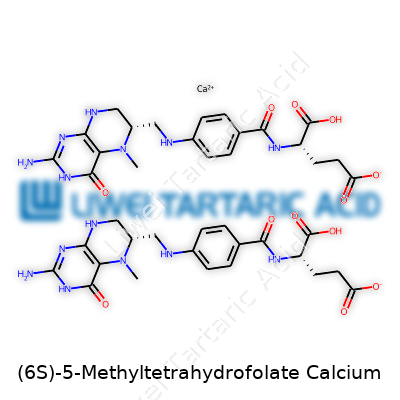
(6S)-5-Methyltetrahydrofolate Calcium appears as a white to light yellowish powder and dissolves fairly well in water, but not as much in alcohol or common organic solvents. Making it shelf-stable and easy to blend with other ingredients challenged food technologists for years. The molecule itself carries a methyl group at the N5 position and a calcium counterion, which dampens its high sensitivity to oxygen and moisture. Because this form is chiral (the 6S designation), it matches the configuration naturally made inside the human body.
Manufacturers must guarantee purity upwards of 98% on a dry basis, with defined limits on heavy metals and impurities set by pharmacopeial standards. Labels in most markets show the content as “L-5-Methyltetrahydrofolate Calcium” or its brand names, sometimes with the exact folate microgram equivalent for transparency. Tablets and capsules often specify the active folate content—not just the calcium salt’s total weight—helping dietitians tally patients’ intake properly. The rules on stability, transport, and shelf life require vacuum packaging and protection from light, which end up costing more but protect consumers from oxidized, useless product.
Producing pure L-5-MTHF-Ca on a large scale started with fermentation using engineered microorganisms, shifting away from totally synthetic routes that generated more waste and off-isomer impurities. The fermentation broth goes through a train of purification steps: extraction, ion exchange, crystallization, and micronization, all controlled tightly to avoid contamination. Chemists then add calcium, yielding a salt form better suited for tableting and stability. Keeping oxygen away and using antioxidants during production makes a chemical difference compared to how older, cruder processes left more breakdown products in the final lot.
L-5-MTHF readily oxidizes in the presence of heat or light, reverting to less useful forms of folate. Its methyl group at the 5-position enables direct participation in methylation cycles inside the body, which has implications for cardiovascular and psychiatric conditions. No need for the body to spend energy reducing or modifying this molecule, so people born with MTHFR gene polymorphisms absorb and use it the way nature intended. In some settings, the calcium salt itself replaces older glucosamine or sodium forms, offering superior performance in moisture-sensitive formulations.
L-5-MTHF-Ca runs by several aliases in laboratory catalogs: Levomefolate calcium, Metafolin, Quatrefolic (in its glucosamine-bound version), and Calcium L-methylfolate. These terms all point back to the same core structure—the only active methylfolate recognized in human metabolism. Some supplement brands market it under patent-protected trade names, but a glance at the ingredient panel reveals the truth for well-informed shoppers who know what to look for.
Over time, both lab experience and clinical feedback guided standard operating practices for handling L-5-MTHF-Ca. Protective storage in light- and air-tight packaging became non-negotiable. Safety protocols during manufacturing mirror those for other sensitive vitamins: strict quality controls, cleanroom procedures to avoid contamination, and real-time monitoring for humidity. Pharmacopoeial monographs such as USP and EP set action thresholds for toxins including lead, arsenic, and residual solvents. Employees in production need gloves and goggles when weighing out or mixing the powder because dust inhalation—while rare—can irritate airways. Factory managers emphasize regular training and compliance checks to keep workplace safety a lived reality, not just a set of guidelines in a handbook.
Medical nutrition strides forward once L-5-MTHF-Ca entered the mainstream. Obstetricians prescribe it for prenatal supplements, ensuring babies receive the folate needed to close the neural tube during development. Doctors caring for adults with genetic polymorphisms—including MTHFR mutations—find direct supplementation stops the blood folate deficit that drives problems like high homocysteine. The psychiatric field keeps a growing interest in active folate to support brain chemistry, especially for depression when standard therapies underperform. Food technologists apply this compound to bread, breakfast cereals, and beverages, mindful of keeping its nutritional punch alive until the product hits the shelf. The element of variability means not everyone processes folic acid the same; with this form, the industry levels the playing field.
R&D labs chase better ways to protect L-5-MTHF-Ca from degradation, trialing new excipients and microencapsulation tech. Universities explore how this active folate works with B12 and other vital nutrients in one-carbon metabolism. Clinical trials expand understanding of its effects on pregnancy outcomes, cardiovascular markers, and mental wellness, especially among people with limited ability to metabolize synthetic folic acid. Instrumental analysis—like HPLC and mass spectrometry—digs deeper into breakdown products and trace contaminants, uncovering new insights for next-generation supplement design. The dialog between biochemists, regulatory bodies, and nutritionists keeps refining best practices, with lessons learned from real-world setbacks and product recalls.
Toxicologists run extensive testing on high-dose L-5-MTHF-Ca, searching for evidence of harm. Most findings point to wide safety margins, as active folate—at dietary or supplemental levels—shows few adverse effects; excess is typically excreted. Some early studies sparked caution about masking B12 deficiency, so clinicians recommend pairing supplements with B12, especially for certain populations. Acute and chronic exposure studies in animals support the idea that methylfolate carries less risk than poorly metabolized forms. As always, outlier reactions—such as allergic responses or sensitivities—crop up rarely, reinforcing the need for vigilance on safety monitoring.
Growing public awareness of personalized nutrition powers rising demand for L-5-MTHF-Ca. As genomic testing gets cheaper and more widespread, more people will find out if they carry MTHFR or similar gene variants and seek out formulas that bypass their body’s weak links. The push for more robust, heat-stable, and light-stable formulations keeps industrial R&D teams busy, especially with the rise of plant-based and functional foods. Countries updating folate fortification standards look closely at switching to bioactive forms for broader public health benefits. On the medical side, researchers hope to unlock more therapeutic uses, from fertility to cognitive decline, based on growing evidence and better-designed trials. The journey of L-5-MTHF-Ca ties scientific rigor to everyday health, blending technical know-how with lived experience and the drive to close nutritional gaps.
Sometimes nutrients catch my eye not just because of the role they play, but because of how differently our bodies handle them. (6S)-5-Methyltetrahydrofolate Calcium isn’t just a fancier take on folic acid. It’s actually the active version of folate that the body can use right away. You’ll hear scientists call it L-methylfolate or 5-MTHF. For people who can’t process synthetic folic acid due to genetic quirks—like the well-studied MTHFR mutation—this form sidesteps the conversion bottleneck and delivers results.
Start peeling back the basics of cell division, DNA repair, and brain chemistry, and you run right into folate. I’ve seen plenty of studies show that a lack of this vitamin can make red blood cells look strange and sluggish. Anemia steps in, leaving folks feeling drained. Iron alone can’t solve it, especially if folate is running on empty. Using (6S)-5-Methyltetrahydrofolate Calcium lifts the burden for those with trouble converting folic acid. I know parents who choose it during pregnancy, since it feeds the fast-growing neural tissue of growing babies and stands as a frontline guard against neural tube defects. The CDC still pushes for enough folate before and during pregnancy; 5-MTHF meets that need for folks who want an option that doesn’t rely on conversion.
Folate works hand-in-hand with B12; together they keep homocysteine in check. Let homocysteine drift too high, and inflammatory fires start to smolder—risking heart and brain problems. Neurologists dig into folate because low brain levels show up alongside depression, cognitive dips, and even dementia. One meta-analysis found that L-methylfolate gave an extra lift when combined with antidepressant treatment, especially in people not getting full relief from meds alone. It’s not a substitute for counseling or proper medication, but it slips into the care team quietly, giving some a noticeable nudge toward recovery.
This nutrient doesn’t travel solo. The calcium salt form keeps it stable, dissolves easily in water, and stands up to the tough environments of supplement capsules or tablets. If you’ve ever tried mixing powders or testing supplement blends, you’ll appreciate the small tweaks that help nutrients do their job more reliably.
I think about older adults, pregnant women, and people with trouble absorbing nutrients from food—maybe because of celiac disease, inflammatory bowel, or bariatric surgery. All face higher odds of shortfalls. The CDC points to folate deficiency being less common than it was in the past, thanks to fortified foods, but gaps still show up. Vegans and vegetarians, who eat more plant sources, can run into risks if they aren’t getting enough.
Too much folic acid without enough B12 risks masking real problems, like hidden B12 deficiency. That mix can cause trouble in older adults. Lab tracking makes sense for those who supplement heavily, to keep things in the right balance. For most folks, a healthy plate with leafy greens, beans, and citrus covers the basics. Adding (6S)-5-methyltetrahydrofolate calcium makes sense when conversion issues, medical conditions, or higher needs pop up, and when pinpoint accuracy matters most. Talk to a health professional about the right form and dose, instead of chasing bottles on the internet.
Folic acid and (6S)-5-Methyltetrahydrofolate calcium pop up all over dietary supplement shelves. Both bring “folate” to mind, linked to healthy pregnancies, heart protection, and even cognitive sharpness as we age. So, what makes one so different from the other?
Folic acid comes from chemists’ labs. It’s a synthetic nutrient, not found in nature. The body needs to transform it using a handful of enzymes before drawing out the benefits. These enzymes convert it into something useful—eventually, the biologically active (6S)-5-methyltetrahydrofolate (5-MTHF). Certain people carry gene variants, especially in the MTHFR gene, that slow down this conversion. Blood work can sometimes show unmetabolized folic acid building up, which raises questions about its safety in big doses long-term.
(6S)-5-Methyltetrahydrofolate calcium skips these steps. It’s nature’s form—the one already circulating in healthy human bodies. Doctors see this as the direct, active form of folate. The body absorbs it right away, putting it to work supporting methylation (that’s the cell’s way of switching genes on and off, repairing DNA, and making crucial neurotransmitters). It doesn’t leave leftovers in the blood. That’s more reassuring, especially for folks with those common gene differences.
Hospitals stock folic acid mainly because it’s cheap, shelf-stable, and familiar. The CDC’s push to fortify foods with folic acid did wonders to cut neural tube defects, saving lives. But science moved along. Now, new studies point toward the risks of unmetabolized folic acid. There’s evidence linking too much unmetabolized folic acid to possible immune changes and masking B12 deficiency in the elderly.
On the other hand, 5-MTHF leads in safety, especially among people with those genetic differences who struggle to use folic acid. Europe’s stricter supplement standards already moved many prenatal and general multivitamins to use (6S)-5-methyltetrahydrofolate calcium instead. Some doctors now recommend people with family histories of heart disease, mood struggles, or recurrent miscarriages check their MTHFR status before picking supplements.
Most people eat enough leafy greens, beans, and liver, so they get active folate already. For those relying on supplements—pregnant women, or anyone with special medical needs—the form of folate makes a difference. For my own family, I choose prenatal vitamins with 5-MTHF, especially knowing how common those gene variations are. The extra cost feels worth it for peace of mind and better odds the body won’t let folate sit useless in the bloodstream. Real food first, and if supplementing, use the form the body knows what to do with.
Food fortification programs could switch to using 5-MTHF instead of synthetic folic acid. More education from healthcare providers can help families understand these choices, so people don’t have to guess which one fits best for them. More research, too, will clarify the safest, smartest way to nourish all our bodies, genes or no genes.
The folate aisle in drugstores offers a lesson in how even vitamins deserve a closer look. Not all forms are the same—choosing the right one can make a difference that sticks, especially with long-term health in mind.
Many supplements promise to boost health, but few have roots as deep as folate. This particular form, (6S)-5-Methyltetrahydrofolate Calcium, turns up as a main character in the body’s story of cell growth. It serves as the “active” version of folate, meaning there’s no guessing game for absorption. People with certain genetic quirks, like the MTHFR gene variant, run into brick walls with regular folic acid, which makes this specific compound more than just a niche product.
Standard folate recommendations sit close to 400 micrograms each day for most adults. Pregnant people need closer to 600 micrograms because babies start building brains and spines right away. Since (6S)-5-Methyltetrahydrofolate Calcium comes pre-converted, studies often line up its dose with the same folate numbers. Most multivitamins and standalone products in pharmacies today carry between 400 and 1,000 micrograms per tablet. The FDA marks 1,000 micrograms (1 mg) as a safe upper limit for adults using any source of folate, including this form. Offering more doesn’t make the nutrient work faster or better, and piling on can mask vitamin B12 deficiency—something older loved ones especially can’t afford.
Anyone with trouble processing regular folic acid finds a helper in this supplement. That means people with MTHFR gene variants—up to 40% of folks with European background, according to published studies—often do better with the methylated form. Expectant mothers stand to gain, too, especially since folate helps close the neural tube in early pregnancy. It also gets attention for people using certain medications. Anti-epileptic drugs, methotrexate, and some cancer treatments knock down folate levels. A doctor might recommend this specific form to replenish stores without overloading the system with unmetabolized folic acid. Vegans, vegetarians, and anyone limiting animal foods can find folate tricky to get from diet alone, so supplements fill gaps.
Folate acts as a team player in pathways controlling DNA, red blood cell formation, and mood. Skipping the right level doesn’t just slow things down—it brings risks. Too little folate can cause anemia and birth defects. Piling on too much can mask warning signs of nerve damage, particularly from low B12. I’ve seen plenty of people turn to high-dose supplements, thinking more means better. Science says otherwise. The National Institutes of Health emphasizes sticking to recommended numbers unless a doctor recommends otherwise. Most people do fine with 400 to 800 micrograms, so buying higher-dose tablets doesn’t mean an advantage.
Taking a daily tablet sounds simple, but health doesn’t run on autopilot. Reading labels helps, since some products list folate as micrograms dietary folate equivalent (DFE), which reflects better absorption. Doctors can run a blood test to check levels, keeping supplements to what’s necessary. Those with specific medical needs—pregnancy, chronic medications, absorption issues—should talk through dose choices with a healthcare provider. Keeping an eye on B12 status, mixing a diet with leafy greens and beans, and using supplements in tune with real needs brings peace of mind. Science and smart choices go hand in hand.
Plenty of people look to supplements as a way to fill nutritional gaps, especially with vitamins like folate. Folate plays a big role in making new cells and helping genes work the way they should. Most folks know about folic acid, but (6S)-5-Methyltetrahydrofolate Calcium, sometimes just called 5-MTHF, offers a form that matches what the body uses naturally. This isn’t a fringe molecule—5-MTHF shows up in leafy greens, beans, and fruits, then supplement-makers pull it into a stable form for capsules or powders.
The talk around 5-MTHF often centers on folks with the MTHFR genetic variant. About 40% of people in some populations have MTHFR gene changes that slow or block their ability to turn folic acid from food or pills into the active type their cells use. Because (6S)-5-Methyltetrahydrofolate skips that conversion step, it comes in handy for those people—to support healthy pregnancy, reduce risk of certain birth defects, and sometimes for mood and cardiovascular support.
Every supplement can cause unexpected reactions for some people, and 5-MTHF is no exception. In clinic visits and online discussions, most folks mention mild stuff—nausea, stomach pain, or trouble sleeping. These tend to show up when folks take larger doses than what’s typical in multivitamins. Sometimes, people sensitive to changes in neurotransmitters—folate plays a part here—share stories of feeling anxious or more wound-up. Doctors sometimes suggest 5-MTHF instead of folic acid for people with depression who take SSRIs, but not everyone feels better; some say they feel jittery or get headaches. No supplement is one-size-fits-all.
High-quality safety studies on 5-MTHF remain limited, but researchers and food safety agencies have watched folate forms closely for decades. The European Food Safety Authority set the safe upper level for folate at 1,000 micrograms per day for adults—matching the threshold in the United States. For pregnant people, the recommended intake stays lower, unless a doctor says otherwise. At regular doses, problems don’t show up often in studies. Unlike folic acid, 5-MTHF does not build up in the blood in a form the body can’t use, which might lower the risk of masking vitamin B12 deficiency—something that can creep up with high folic acid use in older adults.
Drug interactions matter, too. People taking certain anti-seizure medicines or drugs for cancer need to check with their physicians because folate can interfere with how these work. The same goes for B12 deficiency—too much folate without enough B12 can hide classic warning signs, leading to nerve problems down the line. Every year, pharmacists see folks taking folic acid or 5-MTHF thinking “more is always better,” but with vitamins, more can sometimes cause trouble.
Most nutrition experts agree: start with food first—beans, greens, and fortified cereals do a solid job for many. If bloodwork shows a folate shortfall or a health care provider flags a genetic issue, then 5-MTHF can become a tool in the toolbox. But anyone considering high doses, long-term use, or stacking up multiple supplements at once should talk with a professional who can look over the whole health picture.
Taking care with vitamins means remembering body chemistry doesn’t work from labels alone—it depends on genes, diet, and medicine cabinet contents, too. Side effects from 5-MTHF land on the mild side for most, yet listening to your body and working with honest health sources can help dodge surprises. Anyone with a question might want to check with a registered dietitian or doctor who keeps up with the research—not because they sell pills, but because they deal with real-world outcomes, every day.
Folate belongs on every list of essentials for healthy cell growth and function. Yet not everyone processes folic acid, the common synthetic form, with the same ease. Some of us, due to our genetics, can’t convert folic acid into its active form very well. This is more than jargon: it shapes daily energy, mood, and even long-term heart health.
Growing up in a family with histories of heart problems and mood swings, I paid little attention to B vitamins. Only after relatives had babies with neural tube defects or struggled with unexplained fatigue did our doctors mention methylation and the MTHFR gene. MTHFR mutations block the body’s usual conversion route. Up to 40% of people carry some version of this gene quirk, turning folic acid into a puzzle instead of a solution. (6S)-5-Methyltetrahydrofolate Calcium—sometimes listed as L-methylfolate—skips those genetic roadblocks and fills the folate gap.
Women Hoping to Get Pregnant Pregnancy risks and poor fetal development connect directly to low folate. Obstetricians urge women to load up on folic acid to cut the risk of birth defects like spina bifida, but for those with MTHFR variants, regular supplements don’t always get the job done. Using (6S)-5-Methyltetrahydrofolate offers peace of mind. It puts the active form of folate into the body directly—no need for genetic conversion skills.
People Facing Depression and Mood Swings Several studies found that people with folate deficiencies feel lower and recover slower from depression. Psychiatrists sometimes recommend methylfolate alongside antidepressants. In folks with stubborn mood disorders, adding this supplement jumpstarts improvements that regular folic acid fails to bring. Not a cure, but sometimes the overlooked missing piece.
Individuals with MTHFR Gene Mutations A simple cheek swab or blood test can confirm an MTHFR mutation, but practical signs include chronic fatigue, brain fog, stubborn low B12 or folate blood levels, and a family history of miscarriage or neural tube defects. Skipping around the conversion problem with the calcium salt of methylfolate can shore up the body’s reserves where standard fortification falls short.
Older Adults with Cardiovascular Risk Buildup of homocysteine, a byproduct linked to folate function, raises the risk for strokes and heart attacks. People over fifty, especially those with a personal or family history of heart disease, may benefit from active folate if homocysteine runs high. The calcium salt form of 5-methyltetrahydrofolate drops homocysteine levels better than synthetic folic acid in those with genetic snags.
First step isn’t loading up on a supplement. Check with a doctor, especially if you have a known health condition or are planning for a family. Laboratory testing for vitamin B12, homocysteine, and MTHFR gene variants helps guide a personal plan. Also, food can help. Leafy greens, beans, and fortified cereals lay a base, but real deficiencies, genetic quirks, and higher needs call for something extra.
Pharmacies and stores now offer (6S)-5-Methyltetrahydrofolate Calcium as standalone or in prenatal vitamins. Absorption and effect come closer to what food sources offer, which makes a difference for people who’ve run into a brick wall with the usual pills. In the end, staying open to personal differences and getting the right kind of folate can mean better health every day—no matter your genes.


Providing high-quality chemical products and logistics solutions for global trade partners.



