
The story of 1,3-propanediol stretches back to the mid-19th century, when European chemists began cataloging the wide world of alcohols. Early research, mostly academic, painted a simple molecule with two hydroxyl groups and three carbons, not all that flashy compared to other industrial chemicals. By the late 20th century, 1,3-propanediol took on fresh importance. Petroleum companies and research institutes kept pursuing better, cheaper ways to make plastic, and they found that this compound, once overlooked, could transform how polyester is built. The shift from fossil-based feedstocks to microbial fermentation has changed the game: DuPont and Tate & Lyle kicked off industrial-scale bioproduction in the early 2000s, using genetically modified organisms to convert corn sugar directly into 1,3-propanediol. In under twenty years, production methods have stepped closer to renewability, while process economics keep making the old routes less attractive.
At its core, 1,3-propanediol (often shortened to PDO or trimethylene glycol) is a colorless, nearly odorless liquid. Though simple off the bat, it fills a big gap between its cousins—ethylene glycol and propylene glycol—with a pair of alcohol groups at the far ends of its carbon chain. Chemists and industry folks value it because it blends high performance with lower environmental impact compared to some conventional glycols. As a key building block for polytrimethylene terephthalate (PTT), this diol finds its way into fibers, resins, and solvents, often showing up in carpet, textiles, automotive plastics, coolants, even some personal care items.
1,3-Propanediol registers a boiling point around 214°C and melts just under zero at -27°C, sitting as a liquid across a generous temperature band. Its density clocks in at about 1.06 g/cm³ at ambient conditions. This diol mixes easily with water, thanks to its pair of alcohol groups, and it can draw water from the air, making it hygroscopic. It resists oxidation reasonably well and remains stable in storage when handled with clean equipment. Chemically, the alcohol groups on each end are handy for polymerization reactions, where they lock into bigger, more complex molecules. In terms of flammability, it needs higher heat to ignite than solvents like acetone, but operators still treat it with respect, given the potential for fire in industrial volumes.
Every shipment of 1,3-propanediol carries its own technical dossier: producers pin down purity at 99% or higher for most uses, with water content and residual organic impurities flagged in certification sheets. In my experience, trace color or scent can tip off problems—yellowish hues might signal contamination or side reactions. Bulk packaging usually rolls out in steel drums or intermediate bulk containers, with clear hazard symbols for flammability and possible irritation. Regulatory compliance requires labeling under GHS: hazard pictograms, proper product codes, unique batch numbers, and safety guidance. With the EU REACH framework and U.S. TSCA listings, chemical distributors stick close to evolving requirements. Following these tight standards prevents not only recalls but also keeps workplaces safe and clean.
Older textbooks describe several synthetic routes. Early chemists dehydrated glycerol, while others played around with acrolein hydrogenation. Today’s commercial focus centers on biocatalysis: genetically tweaked E. coli or other bacteria munch on glucose, spinning out PDO in fermentation tanks. This method skips harsh conditions and leverages renewable feedstocks. Purification steps—filtration, distillation, and sometimes ion exchange—pull out the diol in near-spotless form. Compared to chemical hydrogenation, these bio-processes have cut energy use and greenhouse gas emissions. The simplicity of the sugar-to-PDO route keeps costs down, just as long as corn or sugarcane pricing stays stable. Teams still keep an eye on process bottlenecks, since removing residual color, smell, or byproducts needs clever engineering.
In the lab or factory, 1,3-propanediol opens doors to a range of reactions. Esterification with acids brings out new polyester monomers; reacting with phosgene and aromatic compounds paves the way to specialty polymers. It’s easy to oxidize either end, turning it into carboxylic acids or other intermediates for pharmaceuticals, agrochemicals, or specialty solvents. Under the right catalysts, PDO handles etherification or crosslinking—flexibility that designers value in both everyday plastics and high-spec applications. Polymer chemists seize on its spacing effect: the three-carbon chain juggles the balance between rigidity and softness in finished fibers or resins, making PTT (from PDO and terephthalic acid) springier than traditional PET polyester.
Ask around different industries and you’ll hear several aliases for this product. The IUPAC name is propan-1,3-diol, and some locals know it as trimethylene glycol or 1,3-dihydroxypropane. Many global chemical suppliers use PDO or the brand name Susterra (DuPont and Tate & Lyle), as well as Zemea for grades fitting personal care and cosmetic uses. These naming conventions matter: using the right one on safety data sheets or supply contracts cuts confusion, keeps customs officers happy, and makes regulatory audits less of a headache.
Working with chemicals day-in, day-out, safety routines turn from “nice-to-haves” to absolute requirements. 1,3-Propanediol’s low acute toxicity makes it less hazardous than some glycols, but direct contact still risks mild skin and eye irritation. For big volumes, splash protection and good ventilation are basic. Storage calls for sealed containers, away from food stocks and reactive agents, under moderate temperatures. Spill responses use absorbent materials with careful disposal, checking that cleanup crews know how to handle glycol spills. Regulatory standards such as OSHA, EU REACH, and GHS set the tone on both signage and training. Industrial audits usually flag gaps in labeling or protective equipment first—these are fixable with proper briefings and maintenance checks.
Most 1,3-propanediol finds a calling as a monomer for PTT polyester, an upgrade for carpeting and clothing compared to older PET fibers—softer touch, easy dyeing, stain resistance, and a bit of bounce. Automotive and appliance makers value PTT for trim and interiors, where wear and tear meet stylish looks. Outside of plastics, PDO acts as a solvent in industrial cleaning, de-icers, and heat transfer fluids. Green chemistry advocates lean into its role as a bio-based glycol for cosmetics, lotions, and food-contact substances, since PDO’s low toxicity fits well with stricter regulatory regimes. The upside of these bio-derived versions often lands as a marketing boost, appealing to sustainability-conscious customers. In my work with polymer labs, I’ve noticed that replacing non-renewable glycols even in small blends helps organizations win green certifications and reach corporate carbon targets.
Research teams keep their focus on stretching the efficiency and versatility of PDO production. Fermentation yields fluctuate depending on microbial strain tweaks, and metabolic engineers adjust gene circuits to boost output or sidestep byproducts like lactic acid. Process engineers fine-tune purification chains to shave off energy costs. Newer directions look at non-food feedstocks—cellulosic sugars, even waste glycerol or cornstalks. Material scientists test copolymers: blending PDO with other monomers to cook up plastics with tuned flexibility, temperature resistance, or biodegradability. Biochemical companies invest in lifecycle studies that follow PDO through its full loop, from carbon source to landfill (or recycling). Here’s where bioeconomy targets meet data: only by tracking real impacts can suppliers convince buyers and regulators to switch from fossil-based analogs.
Toxicologists and risk assessors treat 1,3-propanediol as relatively benign, at least compared to more aggressive glycols. Inhalation or ingestion at typical exposure levels rarely causes harm; acute doses in lab animals press the limits, but practical risks sit low for ordinary users and most workplace scenarios. Skin irritation tests sometimes find mild sensitivity, but repeated daily exposures don’t seem to trigger chronic problems. Environmental studies dig into breakdown pathways and bioaccumulation potential. Under sunlight and microbial action, PDO breaks down quickly, so ecosystems catch few long-lived residues. Regulators gather ongoing data to stay on top of rare or unforeseen health effects, especially as more of the product lands in consumer goods and food-processing equipment.
Looking ahead, 1,3-propanediol stands at the intersection of green chemistry and pragmatic manufacturing. Bio-based routes chew through less fossil carbon and fit well into circular economy strategies. As fermentation upscales and cellulosic feedstocks join the mix, the price advantage over petro-based glycols inches closer. Plastics and textiles are just the start—formulators explore PDO’s suitability in biobased adhesives, better antifreeze blends, even new drug delivery platforms. Regulatory changes on microplastics and food safety all shape how PDO innovations roll out, especially as big companies chase lower emissions targets. There’s a scramble to line up reliable, ethically sourced raw materials, so supply chains don’t undercut sustainability claims. R&D budgets keep pouring into both process improvements and end-product performance, sending strong signals that 1,3-propanediol’s main story is still unfolding.
1,3-Propanediol can seem like an obscure chemical to most people. I remember the first time I saw its name, I pictured lab goggles and endless safety sheets. Over time, though, it kept popping up in places that had nothing to do with laboratories—places like my closet and under my kitchen sink. The truth is, this simple molecule often acts as a bridge between raw materials and products you touch every day.
You’ll find 1,3-Propanediol most often in fabrics called polytrimethylene terephthalate, or PTT. That might sound a handful, but it really just means stretchy, stain-resistant fibers. This chemical helps make those sports shirts that dry quickly and the carpets that hold their color even after years of sunlight and vacuuming. Fabric makers like the added softness and resilience. Shoppers like me care about whether that shirt dries fast after a workout or if the carpet stands up to another juice spill. 1,3-Propanediol plays a sneaky role in all of that.
Beyond fibers, 1,3-Propanediol shows up in cosmetics and cleaning products. In skin cream, it helps lock in moisture. It’s often used instead of petroleum-based glycols because it’s less likely to irritate sensitive skin. For families with allergies or skin conditions, finding a face lotion made from renewable sources can make a real difference.
It sneaks into cleaning products, too. Not only does it help dissolve other ingredients, it offers good performance as a solvent. I once decided to try out DIY cleaners after reading concerns about harsh chemicals in mainstream sprays. I noticed that several “green” brands and recipes turned to 1,3-Propanediol as a safer alternative, especially since it often comes from corn sugar fermentation—not from oil.
Biotechnology now makes it possible to produce 1,3-Propanediol from plants instead of fossil fuels. Companies like DuPont and Tate & Lyle have built massive facilities to ferment corn sugar, turning it into this key ingredient. This change matters if you care about climate and sustainability. I live in the Midwest, where crops influence both local jobs and the environment. Adding value to corn beyond food presents more opportunities for farmers and can shrink reliance on crude oil.
Limitations still exist. Not every product switches over to bio-based chemicals without hiccups. Consistent supply, scale, and energy use all play roles. Pricing swings, depending on crop yields and international oil markets, sometimes make producers nervous about relying on one single feedstock.
Some people argue for tighter regulation and long-term studies to fully understand the health and ecological impacts of using plant-based ingredients. As a parent, I want to see clear labeling and honest data—nobody wants to trade one problem for another in the name of “green chemistry.”
The move towards more sustainable chemicals doesn’t have to be an all-or-nothing leap. Companies can balance cost, performance, and safety, giving people affordable access to products made with less environmental baggage. 1,3-Propanediol serves as a solid example of science nudging us towards options that do a little less harm and a little more good, right in our homes and daily routines.
Most lotion and cream labels show a long list of ingredients. 1,3-Propanediol stands out to those who scan these lists because it pops up in everything from moisturizers to cleansers. Chemically, it’s a diol – a type of alcohol – made from fermentation of corn sugar or petroleum. Its main job: hydrate the skin, keep formulas smooth, and help products stay fresh longer.
Plenty of companies use this ingredient because it grabs onto water and delivers moisture deep into the skin. As someone with sensitive skin, I’ve come across propanediol many times in products from both drugstore and high-end brands. My skin doesn’t sting or break out when this shows up in a formula. And a review of the scientific literature backs up that kind of personal experience: researchers have found little in the way of irritation or allergic reactions, even at fairly high doses.
Dermatologists and the Cosmetic Ingredient Review panel in the US have both looked closely at safety data for propanediol. In tests with human volunteers, most people didn’t react negatively after repeated daily use. Compared to older chemicals like propylene glycol – which causes sensitivity in some users – propanediol gets high marks for tolerability.
Regulatory agencies keep a close watch on what goes into personal care products. The FDA considers 1,3-propanediol “generally recognized as safe” for use in food, which gives some peace of mind about its use on skin. The European Commission also allows it in cosmetics sold across the EU. Both groups have reviewed the available studies, including tests on skin absorption, toxicity, and potential to cause reproductive problems or cancer. The consensus: it doesn’t raise any safety flags when used in the concentrations found in lotions, serums, and cleansers.
Shoppers want to know what’s in the bottle. I’ve fielded questions from clients, friends, and family about every “chemical-sounding” name they spot. But naming something as “chemical” rarely tells the whole story. Water and table salt are chemicals, too. The more useful thing is to understand what an ingredient does, where it comes from, and how safe it is with regular use.
Misunderstandings often grow when companies hide behind “proprietary blends” or buzzwords like “natural” and “clean.” Propanediol walks a middle ground between natural and synthetic, since it shows up both in corn-sourced and oil-derived forms. Full disclosure on sourcing and processing helps people choose products that line up with their values and skin needs.
Demand for “greener” options pushes factories to rely less on petroleum and more on plant-based methods. Companies now make propanediol from fermented corn sugars, often using less energy than older methods. Checking for plant-based labeling doesn’t guarantee a safer product, but it does mean fewer fossil fuels went into that bottle.
By looking past fear-based marketing and asking for specifics, people can decide what works for their skin, their health, and the environment. For now, evidence shows 1,3-propanediol works as a reliable, low-irritation ingredient in cosmetic products. Skincare should feel comfortable and safe, both on the skin and in the mind. Choosing products with clear labeling, good scientific backing, and responsible manufacturing gives real assurance.
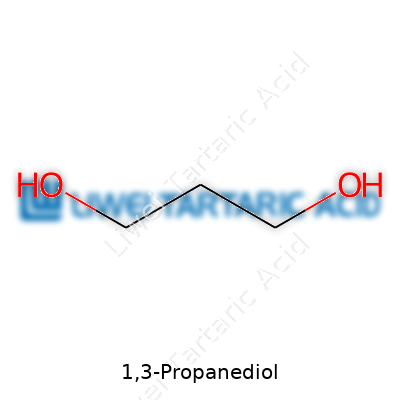
People in the chemicals industry talk about 1,3-propanediol like it’s been around forever, but many outside that world don’t realize how much this clear, almost sweet-smelling liquid touches their daily lives. It’s a straightforward molecule—three carbon atoms, two alcohol groups—close cousin to the more commonly known propylene glycol. Biobased and petroleum-derived versions now run side by side, thanks to growing demand for greener products.
Pour a small amount of 1,3-propanediol, and you notice right off it’s a fairly viscous liquid. Not thick like molasses, but it’s got some heft. Its boiling point, just above 210°C, means it doesn’t just take off into vapor with a little heat. This comes in handy for processes that require stable temperatures and minimal loss to evaporation. Compare it to water, and you’ll see it resists freezing down to about -27°C, so in cold-weather production or shipping, it doesn’t transform into a solid block overnight.
People who handle it appreciate the mild odor—much less harsh than related chemicals. That counts for a lot in labs and factories, where strong fumes mean extra ventilation or headaches by noon. You can mix this compound easily with water and most alcohols, yet it doesn’t get along with nonpolar solvents. That simple fact often shapes equipment design or safety protocols on site.
It’s tough to overstate the versatility. In my own work in sustainable materials, 1,3-propanediol stepped into roles once held by petroleum-based glycols. Companies use it as a building block for bioplastics, especially polytrimethylene terephthalate (PTT), which outperforms some traditional synthetics in resilience and dye-uptake. It works as a solvent, a humectant, and a carrier for flavors or fragrances. You’ll spot its name on the ingredient lists for cleaning agents and personal care products because it pulls moisture from the air and holds it, keeping surfaces or skin from drying out too quickly. These features don’t just offer technical solutions—they shape new product designs that cut petroleum use and carbon emissions.
The shift toward corn-based or sugar-derived 1,3-propanediol comes from more than marketing buzz. Researchers found this molecule less toxic than many petrochemical alternatives, at least for skin and eye contact. Handling precautions still matter, though; splashing concentrated forms can still irritate, so goggles and gloves remain standard. Wastewater containing this compound breaks down better than older synthetic glycol streams, easing pressure on municipal treatment plants. Respirable vapor levels almost never rise high enough to trigger respiratory issues. The EPA and European regulators have cleared it for use in certain food ingredients and cosmetics, which says a lot about its safety profile.
Of course, nothing’s perfect. Energy goes into fermenting or refining 1,3-propanediol, and feedstocks like corn carry their own environmental baggage if grown with too many pesticides or on cleared land. The answer isn’t abandoning new green chemicals; it’s doubling down on smart farming and better life-cycle assessments. Chemical engineers keep pushing for lower-temperature, lower-energy routes. Upgrading biorefineries and using renewable power can turn what is already a more sustainable option into a true win for the environment.
This molecule’s set of properties—stable at temperature, gentle on workers, easy to blend with water, and made from renewable crops—keep it in the spotlight for anyone who cares about safer products or a smaller carbon footprint. I’ve seen firsthand how companies rethink supply chains just to use it. As more research and investment pour in, you can expect new applications beyond plastics and personal care, and a steady nudge toward making modern chemistry a little less rough on the planet.
1,3-Propanediol (PDO) crops up all over the place now. From home cleaning sprays and skin care creams to the polyester in your jacket, its reach is wide. PDO can turn up as either a petrochemical or as a so-called “natural” ingredient. But how true is the claim that this stuff comes from natural sources? That question deserves a closer look, since “bio-based” and “renewable” enjoy a halo effect in today’s market.
Some companies advertise PDO as fully derived from corn sugar, often calling it “plant-based.” They feed glucose from field corn to a specially engineered strain of bacteria—usually Escherichia coli or a cousin—which converts sugar to PDO. This gets refined and ends up in everything from yarn to lotion. The appeal here draws on the renewable touch: replace petroleum, and you slow down carbon emissions, at least on paper.
Not every PDO molecule out there has a biobased origin. About twenty years ago, chemists relied only on crude oil or natural gas, running them through multi-step reactions. Bio-processes emerged as a real player around 2004, when DuPont and Tate & Lyle rolled out a corn-based PDO factory in Tennessee. The biotech method—sometimes called fermentation—produces PDO with the help of living organisms instead of fossil fuel chemistry.
Some of us think that switching a feedstock from oil to corn solves the problem outright. I used to fall for that line, too. The catch is corn farming stalls out if the soil gets exhausted, or fertilizer runoff spoils local waterways. Plus, the process from seed to cleaning-grade PDO includes transport, fermentation energy, and chemical purification—all with their own environmental footprints. The reality is messier than the “all-natural” marketing spills onto labels.
A huge chunk of biobased PDO production relies on genetically modified microbes. The process keeps improving. Factory yields are high, and waste rates stay low compared with some early bioplastics. Yet, the question of “natural” gets cloudy. Using bacteria to convert crop sugar is both a feat of genetic engineering and a clever workaround to oil dependence. It’s a modern answer to an age-old need for practical chemicals, rooted in both biology and industrial technology.
Shoppers value green chemistry, but deserve honest information. Corn-based PDO lowers dependency on fossil fuels, which makes sense given the risks of climate change. The U.S. Department of Agriculture even certifies some PDO grades as 100% biobased through its BioPreferred Program. Yet, growing more crops means using up land, water, and farm chemicals, so the “natural” label skips a few chapters. It takes energy to run a biorefinery, just as it does for any chemical plant.
So, is 1,3-Propanediol natural? With most commercial sources today, you’ll find PDO made from corn, via bacteria, in a process that’s innovative and cleaner than oil. It shifts industrial chemistry in a renewable direction, but doesn’t erase every footprint. A “fully natural” badge sidesteps the sharp edges of both farming and factory work. The way forward means tracking the whole story—supply chain to laboratory, soil health to shelf life—so every tote of PDO stands up to the green claims that keep growing in the marketplace.
1,3-Propanediol shows up in everything from cosmetics to polymers for everyday products, but it’s still a chemical, and treating it casually backfires. Direct contact causes irritation on the skin and eyes. Breathing in the vapors leads to discomfort. Splashes often happen during transferring or mixing, and spills create slipping hazards in production spaces. Employers have an obligation to keep workers healthy. That means proper gloves, full eye protection, and lab coats, not just for lab techs but anyone operating near open containers.
Most sites store 1,3-Propanediol in tightly sealed drums or totes away from heat sources and out of direct sun. The stuff has a flash point around 127°C, so it won’t catch fire as easily as gasoline, but leaving it parked in a hot warehouse brings risk. Hotter temperatures bump up vapor generation and pressure inside containers, increasing the chance of leaks. Well-ventilated rooms keep any odor or vapor at bay and limit danger if a spill does happen. Reliable HVAC systems with regular filter checks pay off every day.
Despite a relatively high flash point, any flammable substance deserves respect. Flames or sparks near spills make for a bad day, and faulty wiring inside storage rooms creates hidden risks. Using only intrinsically safe equipment in those locations helps. 1,3-Propanediol also reacts with strong oxidizers, so storing it next to bleach or similar chemicals raises the odds of dangerous reactions. Good warehouse layouts separate 1,3-Propanediol from incompatible substances like acids, oxidizers, or strong bases, giving physical space between hazards.
Spills run off quickly if floors lack berms or drains aren’t closed in the storage area. Entering groundwater puts both people and wildlife at risk, and regulatory penalties bite hard for releases—even if accidental. Using secondary containment trays or double-walled packaging sharply reduces the chance of a single mistake becoming an environmental incident. Written spill response plans, drills, and visible emergency equipment all keep risks from snowballing.
I’ve seen labels from suppliers fade fast under warehouse lights or get covered with dust during hectic shifts, making it tough to tell one drum from another. Clear, durable labeling showing the full name, hazards, and handling instructions sticks out as the best safeguard against mix-ups. Even facilities with strong safety records run into problems when new hires join or contractors rotate through. Ongoing training, not just one-time orientation, ensures every hand in the building knows what is safe, what isn’t, and how to use the right protective gear.
Chemicals like 1,3-Propanediol aren’t milk or bread; they don’t just spoil overnight. But letting drums sit for years means uncertainty about what’s actually inside. Rotating stock so older material gets used first keeps inventory fresh and helps avoid disposal hazards later. Any waste—spilled, expired, or contaminated—belongs in clearly marked containers for hazardous pick-up, not poured down the ordinary drain.
Staying safe with 1,3-Propanediol means showing it the respect it deserves, not just checking the minimum boxes. Double-layered protection (gloves, goggles) sets a company culture that values people over shortcuts. Good warehouse routines—temperature control, separation of chemicals, clear emergency plans—do the heavy lifting every day. The real solution comes from staff who know their stuff and leaders who invest in clear labeling and thorough, regular training. That combination keeps accidents rare and confidence high.

Providing high-quality chemical products and logistics solutions for global trade partners.



